

SMX @ ad:tech: Paid Search Fundamentals
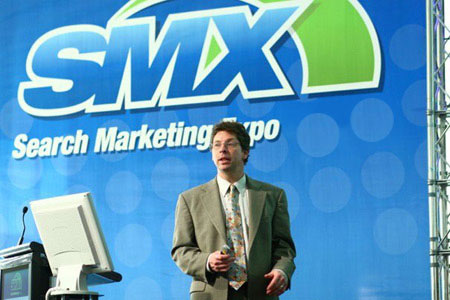 Session Description: Paid search lets you generate traffic from search engines by purchasing ads, usually on a cost-per-click (CPC) or pay-per-click (PPC) basis. This session covers the basics and current best practices of how to purchase placement from the major search engines, including the best ways to succeed with your ads, how to successfully measure performance and how to optimize your complete paid-search marketing strategies. Come join Danny Sullivan and several paid search experts in what promises to be an in-depth review of the paid search marketplace.
This session took place Wednesday, April 22, 2009. The speakers:
- Danny Sullivan, Editor-in-Chief, SearchEngineLand.com (Moderator)
- Mona Elesseily, Director of Marketing Strategy, Page Zero Media
- Chris Zaharias, VP, Search Sales, Omniture
- Nick Sheth, Director of Business Development, Gap Inc. Direct
Unfortunately the presenters talked really quickly, so I tried to get down as much as I could!
Bullet Point Review! Mona Elesseily:
- Get campaign architecture straight from the beginning.
- Think about keywords.
- Tap external sources.
- Proper tracking should be in place from the beginning.
- Is your company equipped to track?
- Define your PPC objectives.
- Tie the objectives to solid metrics.
- Tracking online conversion.
- Online order and pickup offline.
- Store location page.
- PPC local
- Focus on ad copy.
- Brainstorm.
- Product and Service descriptions.
- Calls to action.
- Offers.
- Features/Benefits.
- String things together after brainstorming.
- Brainstorm.
- Think “buying cycle”.
- Testing yields results!
- Get rid of extra information if it doesn’t impact conversions, doesn’t belong.
Nick Sheth:
- Know Your Trademarks.
- Register your marks with Google (including misspellings).
- Ensure you have clear, well communicated policy usage of marks by partners (affiliates, shopping engines, partners, etc.)
- Monitor your marks with a service
- Suggestions: AdGooroo, The Search Monitor, BrandVerity (I can personally vouch that this one is awesome), or Mark Monitor.
- Remember your domains (offensive and defensive).
- Suggestions: Alias Encore (which, again, I can personally vouch for), CitizenHawk.
- Hold domains that are even remotely related.
- Know Your Promotions & Offline Marketing Calendar.
- Calendar your promotions and share them with your agency and all digital marketing teams.
- Leverage offline marketing (buy terms, watch trends, use content ads).
- Finely tune search copy; don’t use blunt force – promotions should be relevant to your ad group.
- Work closely with marketing within your organization on all levels. Building trust is paramount to gaining the autonomy needed to execute quickly.
- Know Your Site.
- Landing page relevancy – right page for right copy and keyword.
- Product availability and assortment – consider using data feeds to automate.
- Dead pages – seems like common sense but there are a lot of ads out there that point to dead pages. Make sure you have internal tools and/or an agency to monitor pages.
- Know More About Your Site.
- Use on-site search to drive SEM & SEO.
- Use paid search to get ideas for SEO.
- Use SEO for paid search keyword ideas.
- Have a human review – don’t leave it all up to automation.
- Know What Works.
- Develop a culture of testing, including landing pages, copy, and promotions.
- Build a test budget into your annual P & L.
- Statistical significance is key.
- Maintain a testing plan that always has tasks and is consistent.
- Know Your Business.
- Understand your goals.
- Understand how you are moving the needle.
- Ensure you’re thinking about your portfolio optimization.
- Question branded search and answer: is it incremental?
- Look at everything holistically.
Chris Zaharias:
- Start -> key business requirements -> keyword research -> campaigns & ad groups -> syndicated strategy -> ad copy -> bid optimization -> analyze & conversions
- Business goals -> KPIs -> Optimization
- Use pre-defined metrics.
- Clicks, Impressions, Click-Through Rate
- Return on ad spend.
- Cost per Acquisition.
- Define and value customer metrics.
- Cart abandonment rate.
- Average Order Value.
- KPIs to measure branding.
- Multi-KPI Optimization.
- Search reacts to TV advertising.
- Measure across channels.
- There’s a myth that the long tail keeps growing – this isn’t true.
- The long tail is now in reverse.
- People are using search as navigation – i.e. they already know what they’re looking for but they go to a search engine to find it easily instead of typing in the URL directly.
- Assumptions:
- The long tail keeps growing.
- There’s 1001 things to do in search.
- PPC = Traffic Management.
- Listen to your search engine.
- Reality:
- Win the head, win the battle.
- Return on efficient, defined work flow.
- Pre & post-click are equally important.
- Search engine advise is often a contrary indicator.
I don’t have any notes from a question period, and I definitely don’t remember there being time for questions. Overall this was a completely useful session for me, given that I’m not an old hat at PPC marketing. It was presented very well and clearly thought out. I appreciated the slide presentations that all three presenters used and I only wish they’d shared them online somehow!
Read Moread:tech San Francisco: Performance Marketing – Getting the Most from Your Marketing Dollar in a Tough Economy
Session Description: How can marketers get the most from their budgets in a difficult economic climate? We’ll explore how to attain more from a smaller budget via performance marketing with practical, tactical solutions. We’ll look at the pros and cons of allocating dollars to performance marketing and we’ll discuss what technological innovations are coming to the performance marketing space that will maximize budgets and minimize challenges.
This session took place Wednesday, April 22, 2009. The speakers:
- Neil Strother, Analyst, Forrester Research (Moderator)
- Peter Bordes, CEO, MediaTrust
- Steve Schaffer, Founder and CEO, Vertive
- Jarvis Mak, Senior VP, Global Research and Insights Director, Havas Digital
- Kelly Powers, Senior Manager, Customer Acquisition, Zazzle
This session was definitely geared towards those marketing and advertising professionals that are not already in the performance marketing game. It was very insightful to watch from that point of view in mind.
Bullet Point Review!
- Neil asks “What is performance marketing?”
- Paying only for results, whether those results are leads, referrals, a percentage of the sale. Advertisers get to determine how much they pay.
- You can leverage your affiliates to assist with your paid search efforts.
- You need to have good landing pages.
- What’s the real value of the actions being driven?
- What you’re paying for is marketing.
- Affiliates have more incentive to drive more qualified traffic and customers.
- Affiliates drive higher conversions, average orders.
- There’s three types of advertising, CPM, CPC, and CPA.
- Merchants only want to pay one touch point for the sale.
- There’s a mentality that affiliates are frowned upon; CEOs will be wary of the methods but CFOs will be excited about the value and efficiency of the channel.
- AM is very data driven – more money is shifted towards traceable marketing.
- Executives need to understand affiliate marketing; the whole industry is misunderstood.
- Industry is starting to get the data out and break through the black box and lack of transparency.
- Peter briefly explained what’s going on with the #advertisingtax to the crowd.
- A couple of states have been able to stop the #advertisingtax but it’s moving fast.
- Fraud has grown exponentially, especially in lead gen.
- Paying for leads welcomes fraud in som,e industries, ask yourself if you can pay for a different action.
- A major player will soon announce a ranking system (Peter couldn’t divulge who).
Points brought up during the Q&A
 Is there a metric to show brand safety? No. It’d be nice to take the focus off the brand.
- Yes you need brand awareness, but that’s not going to drive a sale. The best offer is.
- It’s not infinitely scalable; you can always throw more money at search, etc. but throwing more money at affiliate marketing doesn’t work because the core is the relationships.
- Amazing how much more some merchants pay on other marketing methods and channels over affiliate marketing.
- Advertisers need to do a better job at attribution to track the sales to the correct channels.
- Feel free to launch new products with affiliate marketing; it has worked in the past when done right.
- What are some practical takeaways?
- Continue to optimized
- Work on attribution
- Look at marketing channels as a holistic portfolio.
- Focus on better, fewer networks and don’t spread your program too think.
The Q&A portion wasn’t so much a traditional Q&A as it was a case study like discussion. The panel really wanted to help with real examples, and only one gentleman in consumer finance was willing to ask for assistance.
Read MoreOnline Marketing Glossary: Distribution Network
Distribution Network:
- A network of websites or search engines and their partner sites on which paid ads can be distributed. The network receives advertisements from the host search engine, paid for with a CPC or CPM model.
 To be completely honest, I don’t have an example of this or any experience. If you do, please share it in the comments so we can all learn from YOUR expertise! You have all weekend to “school” us!
____
Glossary Definition From ABC’s of Online Marketing by Alexandra Wharton, Issue 22, Revenue Magazine
Online Marketing Glossary: Trusted Feed
Trusted Feed (also Paid Inclusion):
- A trusted feed is a fee-based custom crawl service offered by some search engines. These results appear in the “organic search results” of the engine. Typically, the fee is based on a “cost per click”, depending on the category of site content.
Trusted feeds are well suited for web sites with hundreds of pages. Many SEO firms offer trusted feed services.
____
Glossary Definition From ABC’s of Online Marketing by Alexandra Wharton, Issue 22, Revenue Magazine
Online Marketing Glossary: Cost per Click
Cost per Click (CPC):
- The cost metric for each click to an advertising link.
I remember this type of advertising was all the rage in the early part of this decade, but has since fallen out of favor since the qualified leads are not as reliable or bountiful.
____
Glossary Definition From ABC’s of Online Marketing by Alexandra Wharton, Issue 22, Revenue Magazine
Google Buys DoubleClick – Googlezilla Attacks!
It’s official! Google has closed the deal and purchased online marketing agency DoubleClick, who also run affiliate network DoubleClick Performics. There are already graphics up on the DoubleClick and Performics homepages announcing the merger. According to Performics it’s business as usual and the two companies will work independently for now.
There’s no word yet on how this merger will affect Google’s amazingly successful AdWords or the ever growing Performics, both tools of the successful affiliate. It’s easy to speculate that eventually both will be rolled into one mega-monster network offering PPC, CPA, and CPC opportunities for affiliates. Truth is that we just don’t know. While that seems it would be the obvious long term goal, Google is known for innovation and could completely knock our socks off with something else in store. Only time will tell!
More blogs on the Google acquisition of DoubleClick:
- Shawn Collins at Affiliate Tip
- Heather Paulson at ReveNews
- Om Malik at Gigaom
- Andy Beal at Marketing Pilgrim


