

Why Online Rep Management is a Must for Any Affiliate Marketer
As an affiliate marketer, the internet is essentially your life. You’re online all the time and your existence is based off how well you are able to distribute yourself across the web. The name of the game is to get to the top of the search engine results pages (SERPs) and stay there. However, in addition to selling specific products, you are essentially selling yourself, and because of this, you must be in control of your online reputation at all times.
Simply purchasing the best SEO software used could grant you a solid spot on the search engines. You could simply plug yourself in, and gain instant popularity. You really didn’t have to worry about others discovering precarious information about yourself, or about unwanted information taking precedence over your well-created websites.
However, the rise of social networking sites like Twitter, Facebook, and LinkedIn have made maintaining top positions and an online image much more difficult. Just within the last year, we have watched companies and politicians destroy themselves with one wrong Tweet or wall post.
Old school SEO simply cannot protect you anymore. You have to remain proactive about managing your online reputation by incorporating the use of SEO, social networking sites, and your blog. If you don’t, you risk having your reputation hurt or ultimately destroyed by either your own negligence or a competitor.
If you choose to use social networking sites to help manage your affiliate marketing image, and you should, here are a few tips to making sure that you are using your accounts to effectively manage your online reputation:
- Acquire multiple social networking accounts
- Actively post to each site daily
- Quickly and politely respond to any negative comments
- Keep your Followers actively engaged through varied media
- Maintain a consistent message across all sites
Finding success with affiliate marketing is no easy task. You have to expend time and energy to produce substantial income, and then you have to maintain a positive online image to stay ahead, not to mention additional time spent traveling for speaker events and conferences.
Affiliate marketing may not be super easy, but maintaining a positive online image can definitely make it easier for you. Not only will you be able to gain a stronger following, but you will also be more likely to gain the attention of bigger clients. So don’t place all your hope into basic SEO. Take control of your online reputation by incorporating social media and common management practices.
Read MoreWeb 2.0 Expo: Optimize Your Organic Search Results Leveraging Social Media & Blogging
 Session Description: I’m all a Twitter ‘Cause your MySpace hurts my Facebook when I’m Linked-in – Learn how to leverage social media and your current website to DOMINATE search engine results and improve your organic rankings! Sponsored by Verio.
Industry expert and published author Heather Lutze gives you the rundown on her social media strategies from her new book, The Findability Formula. This breakout will give you actionable tactics you can implement immediately to get your website ranked higher in search engine results. Social media is HOT and delivers results if you know how to use them to their fullest potential. Learn how to use keywords effectively with Twitter, Linked-In, Youtube, Facebook, as well as your own company website to increase your search engine rankings. It is all about knowing and understanding the Findability Formula – and that is what you’ll learn in this workshop!
This session took place Thursday, April 2, 2009. The speaker:
- Heather Lutze, Lutze Consulting
Heather had a lot of great things to say; it was a shame that she didn’t have enough time to really go over it because of such a long pitch by Verio, the sponsor of the session. One thing Verio did that was annoying but I can’t really fault them for, was parking someone at the door and using the leads scanner to scan the name badges of the people coming in. Annoying, but since they were sponsoring the session, I can’t really fault them for it.
Bullet Point Review!
- Social media gives you a platform to position yourself as an expert in your field.
- Strategy:
- Connect with the right search keywords.
- Edit your social media profiles and elements with keywords.
- Track the results in Google search results.
- Know how users search:
- 15.2% are 1 word search phrases
- 31.9% are 2 word
- 27% are 3 word
- 14.8% are 4 word
- 6.5% are 5+ words
- The longer the keyword, the faster you’ll show up.
- Longer search terms are looking more to purchase, less informational or shopping.
- Resources: Don’t Make Me Think by Steve Krug and The Long Tail by Chris Anderson.
- Tool: Google External Keyword Tool
- Tool: Keyword Discovery
- Connect with the customer when they’re ready to take decisive action.
- Misspellings can rank highly (sometimes they convert higher).
- Look at the pages and be sure you actually want to show up amongst that company.
- Anything over 100 searches, long tail.
- Open tool, whats most targeted keyword, then write blog post (put the keyword at the front).
- Recommends All in One SEO Pack, ShareThis for WordPress.
- On LinkedIn, when you put your last name in put a dash and your keyword.
- Start on the long tail and work your way backward.
- Do it for your name, do it for misspellings, rank the whole page to push out the “sucks” terms.
Because of the 20 minute pitch for Verio at the beginning of the session, there was zero time for questions, which was a shame. I was hoping for some more real-world examples that weren’t just about Heather. There was time for one where a woman who is a voice-over talent was looking at it from her standpoint and Heather walked through the practical application, which was pretty cool.
Overall it was a good session once Verio was done talking, and I wish she’d shared her slides with the Web 2.0 Expo folks, but alas it’s not on their website.
Read MoreSocial Media Marketing Summit: Brian Solis
As promised, I will deliver with more notes from the Social Media: The Marketing Summit conference. This was the second talk of the conference promising to tell attendees why social media is the new and much better PR and how to garner attention and then make the most of it. The featured speaker was:
- Brian Solis, Founder and CEO, FutureWorks
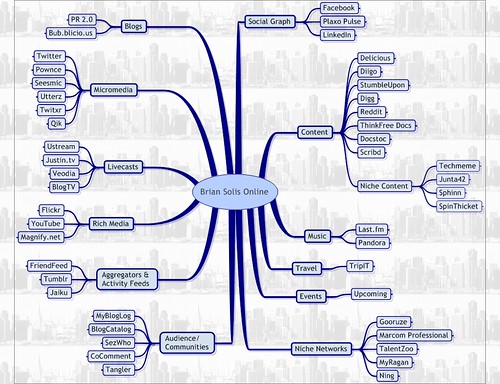 I’ve heard of Brian previously and had the pleasure of meeting him upon my arrival at the summit Wednesday morning. Incredibly nice guy – I later found out through Twitter that it was his anniversary and he’d still agreed to come talk! And it was a great lesson on social media as public relations.
Brian shared some pretty well-known charts he’s created, which we even mentioned in our panel as well since they’re so provocative.
Bullet Point Review!
- PR people are the most popular at any company.
- Social media is like a renaissance of sorts.
- Markets are conversations, participation is marketing.
- We can’t control the message anymore.
- We miss what we’re not part of.
- One -> One and Many -> Many are important communication concepts to use in social media.
- Something to think about: how do you define influence?
- There are 120,000 new blogs started every day (I believe the source was Technorati).
- Social media is not just blogger relations.
- PR is not about top down anything anymore.
- Old metrics no longer ally with the new web.
- Something to think about: are you an evangelist or a consultant?
- Are you confined to the role of a social marketer or do you represent something with long term value?
- This is about public relations – remember that!
- Everyone feels like they’re an expert about something.
- Social media creates a new hybrid of PR professionals.
- We become influencers.
- Understand how to match people to products.
- There are 3 sides to every story – what you want to say, what people want to hear, and the truth somewhere in the middle.
- People = viral.
- No social media is rooted in broadcast, 1 way streams, or blasts.
- Who owns this channel? Sometimes it’s advertising, PR, marketing, customer service.
- It requires a champion internally, but it’s really everyone’s responsibility.
- It’s the listening that separates experts from the theorists.
- People become pseudo-sociologists – each community is radically different.
- Chart your social media.
- Identify ways to deliver value.
- It’s about conversations not messages.
- Cultivate relationships.
- Remember you’re speaking with people, not an audience.
- DO NOT jump in and start pushing a message or shilling.
- DO NOT SPAM.
- DO NOT fake it.
- Remember that social media requires daily participation.
- Interactive marketing is starting to seriously clash with traditional advertising.
- PR is contending with outsourced relationship managers.
- Web marketers are grappling with digital content creators.
- PR is no longer defined by hits.
- For every bit of information you push out, the higher your authority as an expert becomes.
- Conversations are traceable.
- Social media is not the final frontier – this is just the beginning.
- The semantic web is around the corner.
- Social media is a means, not an end, and is a lesson.
- Being human vs. humanizing your story.
- Either you’re an employee or you’re an evangelist.
- All your social media efforts work back to building your personal brand.
- Respect the community and it will respect you.
- Companies will earn the relationships they deserve within social media.
Points brought up during the Q&A
 How did you decide where you need to be? Looked at keywords, thought leading people’s names to see where they were, there are tools to show metrics.
- When asking some major brands why they got into social media, they just said they felt like they needed to be there. When asking them how they track they said “We don’t.” which is cool but scary at the same time.
- There is math you can do to see where or how deeply to participate. Look up your brand + sucks to see the suck factor and use that to gauge your success.
- What do you look for in hiring a community manager? They vary, the ones who really understand social web are very expensive. Use the social media tools to find them – put out a tweet, use LinkedIn.
Great stuff that helped to set some of the high level concepts on social media for the relative newbies in attendance and people who really had the questions on how to make social media work for their business. I’ve seen lots of people talk about how powerful social media is, but this was very related to make it really work well for your brand and company. Great job!
Read MoreOnline Marketing Glossary: Social Network
Social Network:
- Online networks of communities who share interests and activities or who are interested in exploring the interests and activities of others, which necessitates the use of software.
 Okay, this seems like an overly technical and complicated definition, so let me throw some commonly known examples at you instead. Facebook. MySpace. LinkedIn. Social Networks and social networking is a great way to connect with friends, family, and colleagues!
It’s probably too late to register for Affiliate Classroom Live, so now you’re officially missing out on my round table discussion about social digital networking for affiliate managers, which will be happening in T-minus 1 hour and 50 minutes in the Waterfront I Ballroom here at the Boston Seaport Hotel.
Don’t worry – I’m sure to post a recap. I’m solid like that 😉
____
Glossary Definition From ABC’s of Online Marketing by Alexandra Wharton, Issue 22, Revenue Magazine
Free Toolsday for June 17th
Once again this week, it’s technically still Tuesday so I’m a bit late for the East Coasters, but hopefully this is worth it.
Tim Carter of AskTheBuilder.com said during the video panel at the last Affiliate Summit back in February that people go onto the internet for two reasons: to be entertained or to solve a problem. A great way to solve 80% of your business related questions is to go to LinkedIn Answers.
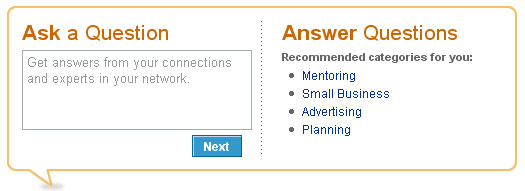
I haven’t had occasion to ask many questions since there are SO many useful questions in a variety of topics. In terms of business information that’s relevant to your working life, this tool kicks the crap out of Yahoo! Answers. This is targeted information in a really easy to find format. Unlike forums that can be filled with years of information out of context, LinkedIn Answers allows you to search for the information you need and find it fairly quickly.
Don’t take my word for it… go check it out! LinkedIn Answers. And remember if you’re an expert at something, share your wealth of knowledge and answer some questions too! Karma, people!
Read MoreSocial Media Marketing: Wave of the Future?
 I figured out a really nifty thing to do on LinkedIn a few months ago… creating an HTML email signature with a link to this blog, to the PsPrint website, and to my LinkedIn profile. I was, sadly, highly amused by this function and emailed a colleague to show it off.
Colleague: Oh that is cool…I am still not 100% comfortable with online communication websites but Linked In seems cool because it’s business connections.
Me: But it’s the waaaave of the futurrrrre. And we’re going to start social media marketing, so get used to it :p
Back in August we decided to do a full frontal attack on social media! I can’t say much yet since we’re still fleshing out the procedures and nitty gritty details, but I’ll be taking the lead on it. That was decided back in August and we still haven’t made any progress on it, other than my blogging efforts here.
It was exciting to get some new responsibilities and start working on a new project. Our mailing services is pretty automated and our affiliate program was starting to go places. I couldn’t wait to talk more about it, but mum was the word at the time.
So I got to thinking about it… is social media and online networking really the wave of the future? What are your thoughts?
Read More


