

Social Media Marketing Summit: Keynote 2 Shel Israel
I’m going to attempt to post this RIGHT after it’s done, so as I’m typing Shel Israel is talking. Don’t worry about not being rude. I have an uncanny knack of being able to type without looking at the screen. Nifty, huh? I digress, this presentation was given by:
- Shel Israel, writer, GlobalNeighbourhoods.net
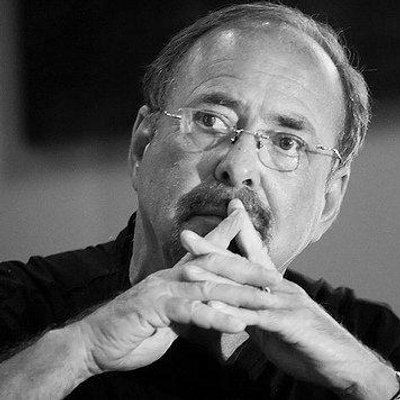 Shel took most of the presentation to talk about people he’d interviewed. Some of the anecdotes were useful and some were just that – anecdotes. I only outlined some of the more interesting ones for you that might have some take-home value.
Bullet Point Review!
- Has been following social media since 2005, taking a business look at human stories.
- He gets paid to interview people about social media & how it impacts their business and culture.
- Whether you want to or not, social media is where it’s going.
- The internet came and gave us email, but it wasn’t as conversational as social media.
- The growth of social media has been more phenomenal than people realize.
- When they started their book in March 2005, there were about 4 million bloggers worldwide, not that impressive. If you add up all the social media content now you get close to half a billion people. And growing.
- There are great tools to find the conversation – Google Alerts, Radian6, Google Analytics.
- Since starting his project, he’s done 110 interviews, 33 countries, 5 continents (mostly bloggers).
- 2 billion people will be online by 2011.
- Michael Dell, Dell Computers.
- Dell might just be the world’s most prolific social media company.
- Conversations are more valuable than ads.
- Engagement beats impressions.
- Laurel Papworth, social networking strategies.
- Was invited to help set up a social network for Saudi women. Shel Israel asked her ‘what are they like’ and she said ‘they’re like all women’.
- They need anonymity online to avoid real world repercussions and need to support each other.
- Queen Rania of Jordan is on YouTube with near 4 million visitors doing almost daily posts & talks about the myths about Muslim women.
- Isaac Mao, China’s first blogger.
- The rate of growth for Twitter and Facebook seems to be higher than blogging in China.
- The Chinese blogging community has figured out how to bypass firewalls to publish outside of China through use of IPs, etc.
- Feeds the collective power of crowds.
- People’s voices will be heard – they are going to use these tools to have the conversations they used to have at the water cooler and now it’s amplified and can travel around the world very fast.
- Sun Microsystems is using a behind the firewall internal social network to collaborate and get products to market faster.
- Youth is the killer app. Its driving everything because social media is coming second nature to the upcoming workers of the world.
- Tools are allowing people to interact online much like they already interact offline.
- People are the same. Cultures differ.
- Useful info > pitches.
- Community now has the power.
- Generosity is competitively lethal.
- Adoption is faster than you think.
- Scalability is the new ROI.
- Measurement is being resolved. This is what people are super focused on this year.
- Using social media in a recession: it’s the most cost-effective option for communications with customers.
- 1 person can scale worldwide very quickly.
Points brought up during the Shel Israel Q&A
 What would you have in your shopping cart for low cost options? He hasn’t a clue – when he started, it was just blogging, but now there’s a powerhouse of tools. Where are your customers? What tools are you the most comfortable with? There are basic tools, but you may be better with one over another so you have to decide.
- Is there anything going on within the political campaign use of social media that businesses can learn from? They’re using incredible intelligence gathering tools and this is the first presidential election in history where social media is playing a role. Looking back during the next election will be interesting. This is a big step in a revolutionary process. People’s voices are being amplified.
Overall a good presentation, well done, with valuable case studies and a few ace takeaways. This is the first time I’ve heard Shel Israel speak, so it was a great opportunity that I hope to repeat at future conferences. There wasn’t much time for questions, but I get the impression that the questions would have gone on into generally tangential directions, so perhaps it was for the best.
Read More


