

Why Site Layout Matters
Guest Post by Ken Myers.
Website design entails more than just a few images here and there with possibly a table in the middle to organize content. While you don’t have to go overboard and design an overly extravagant site, you could still benefit by having something that is simple and eye-pleasing to your visitors. There are millions of styles on the Internet and many of them constantly restructure the design. It is important to have the perfect design in many ways.
Easy Access
You don’t want your visitors getting lost on your website. Information and relevant links should be easy to find and click. Most websites will put categories and such in a navigation bar on either side of the body.
Jigsaw
If your site looks like someone through a puzzle on the computer screen, chances are the visitors are going to move on. A dynamic smooth feel is needed to have a successful website. Organization of your content is very important.
Busy
You don’t want to cover your website with too much flash. Images, banners, and other add-ons could distract from the content making it difficult for visitors to read. People want information when visiting a website, not an art gallery – unless that is what your website is for.
Clean
For the best results from search engine optimization, you want to make sure your coding is cleaned up. There may be errors in the code that can cause search engines to not crawl your website or cause visitors to see a dreaded 404 error.
Audience
Many designers will use the information from programs such as Google Analytics to determine what the content dimensions should be. For instance, if most of your visitors are using tablets or smartphones with a low resolution, then having a website that is 2400 pixels across would make viewing difficult. Know your audience and the technologies used to browse your website.
Scripting Additions
Most of your visitors would rather have a functional website that provides the information they are looking for. Adding too features and java-based scripts could make the experience unpleasant. Do your visitors really need to know what the temperature is in your home town?
Knowledge
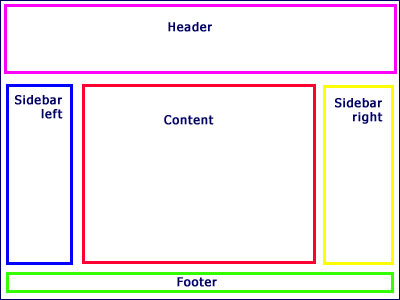
It is not difficult to come up with a design that works. If you’re in doubt, take a look at other websites and see how the designer put them together. For the most part, important links are across the top, informational links are along the left side, and the content is in the main body.
A website isn’t set in stone. If you are unhappy with your current design or are bored with the same look day-in and day-out, you can always change it. Depending on how the information is linked through coding, changing how a site looks and feels isn’t as difficult as it may seem. As long as it is functional for your visitors and the code is clean, you shouldn’t have too much of a problem re-envisioning your website.
—
Ken Myers is the founder of http://www.longhornleads.com/ & has learned over the years the importance of focusing on what the customer is looking for and literally serving it to them. He doesn’t try to create a need; instead he tries to satisfy the existing demand for information on products and services.
Read More6 Tips To Improve Keyword Research for SEO Content

Guest Post by Sam Mauzy.
Keyword content creation is one of the best ways for people to increase their search engine rankings. However, it is important that you chose the right keywords to focus on for the best ranking results. Here are some tips for determining which keywords you should use as a part of your SEO strategy.
Long Tail Keywords
Instead of focusing on direct keywords, like “cars” or “cats,” websites are far better able to get traction with long tail keyword searches. To begin with, most people are more likely to search specifically than broadly, so it makes more sense to create content for phrases like “cheap used cars” or “long-haired cats.” To find the most popular terms related to keyword bases, simply type in a keyword and Google will provide a drop-down list of the most popular long tail searches.
Localize Your Keywords
One of Google’s recent updates was to prioritize local search results. This means that if you have a physical storefront, you will want to create keyword content that includes your location. This also ensures that you are getting your target demographic to your website. If you sell used cars in California, visitors from New York are likely to be simply taking up your bandwidth.
Focus on Keywords that Improve Your Conversion Rate
Related to localized content, you want to try to hone in on keywords that will not only increase the number of visitors to your website but keywords that will improve your conversion rate as well. Creating keyword content for things that have little to nothing to do with your site will not improve your conversion rate and could hurt you in the long run as it increases your bounce rate.
Take Advantage of Analytics
One of the best ways to do keyword research and track your progress is to look at analytic data. The information provided by Google Analytics alone is both extensive and valuable. Some of the things that you should be looking at specifically are your pages with high bounce rates and your pages with high conversion rates. High bounce rates mean that people aren’t finding what they are looking for, meaning keywords used on these pages are probably not your best bet. Conversely, landing pages with the highest conversion rates are those that you should use as a base for additional content.
Use PPC Data
PPC ads are a great way to do a test run on a keyword selection. Since keyword content can take weeks or even months to turn into search engine ranking improvement, PPC ads are a quick way to see if new keyword content will improve your conversion rate. Used correctly, PPC ads are a great source of inexpensive and real-time market research.
Make Your Keyword Goals Attainable
Finally, make sure that you are choosing keywords you can realistically achieve high search engine rankings with. It is better to achieve a high ranking with a few long tail keywords than spend months achieving little progress with a highly competitive keyword. That is not to say that you cannot ever achieve top rankings with a particular keyword, but you should consider it a long term goal and put your effort into several keywords at the same time.
—
Sam is a blogger with a background in SEO. His latest challenge has been learning how to make iPhone apps which he has found to be a great new marketable skill to have.
Read More3 Essentials to Effective Internet Marketing
 Internet marketing is the new gold rush in the commercial world. And it’s not just big businesses that are whole-heartedly embracing online avenues, small businesses and even single-person entrepreneurs and freelancers now view the Internet as the de facto method for sales growth, exposure, and blog allegiance. Here are a few ground rules for responsible and effective Internet marketing:
Use affiliate marketing smartly.
Don’t litter your blog with hundreds of affiliate links and then get shocked when your readers are turned off. Pick and choose your affiliates carefully, as you would colleagues or partners in any kind of business environment. When you align yourself with an online merchant, you’re in a sense tying your reputation to theirs. If you’re against synthetic chemical-laden manufacturing, for example, and you’re considering affiliate links from companies who manufacture custom water bottles, make sure the company you endorse produces polycarbonate alternative bottles. The point is to make your links consistent, credible, and ethical. Nothing will destroy your credibility quicker than completely selling out your principles over a single affiliate.
Don’t be too repetitious.
Obviously, aggressive marketing requires certain levels of redundancy. How many times have you seen a company tweet the release of a new product a thousand different ways? Or send out multiple email newsletters in a single week? But don’t keep posting the exact same link to your Kickstarter page over and over again with no new information. This just makes you seem either desperate, dense, or dim-witted, depending on who your friends are. Always provide new information or a new context when reposting your own link.
Utilize several different platforms.
If you’re stuck on just Twitter or just Facebook you’re missing the point of social media. It’s not about one application, it’s about the totality of social media sites sharing, integrating and working together with powerful Internet tools like SEO. If you’re releasing a new project combine crowdfunding, viral video on YouTube, microblogging, podcasting, Fan Pages and whatever else you can think of. A successful Internet marketing campaign is rarely relegated to a single site. Diversify your portfolio, so to speak.
Do you consider yourself a self-promoter, a marketer, an advertiser? If the answer is yes, then you’ve probably dabbled in Internet marketing and will do so again in the future. Make sure you’re representing yourself and your brand effectively without being seen as distasteful, spammy, or tedious.
Read MoreBlogging for Geniuses

Sometimes the element of blogging that holds people back the most is over-thinking their blogs. That’s why this post is entitled “Blogging for Geniuses” as opposed to ‘dummies.’ Many companies will engage in paid search management or marketing analysis to determine what topics to blog about on their corporate web pages. But for individuals looking to get their voices out into the blogosphere, sometimes the easiest way to get started is to shoot from the hip and write from the heart. Here are some practical tips for the wayward blogger to get started, or to augment their productivity and blog performance:
Don’t tackle subjects that are beyond your area of expertise.
Most any subject you can think of will be covered six ways to Sunday by people who probably know the facts a little better than you. Stick to topics that you know about from experience. It will imbue your posts with an air of authenticity that speaks to Internet readers who are already inundated with duplicate material on a daily basis. Be sure to include links to the articles from your research, especially if they’re from sites with a high page rank.
Research before you write.
Even though you should blog from the heart, you still want to have your facts straight. It’s also good to be able to bring interesting historical perspectives to contemporary issues. Research is the best way to fact-check your blogs and give them original angles.
Use keywords to make sure your blog is optimized for search engines.
Keywords are excellent for SEO, as they give weight to your blog in popular search engine results, and they also help you to keep your writing focused. Blogging is not rocket science, nor is it brain surgery, but it is a powerful Internet tool. Combined with email marketing, SEO on your blog can earn you cash, prestige, and a loyal readership.
Use social media to promote your blog.
Once the writing on your blog is focused, it’s time to focus your blog as a whole by getting it into niche corners of the Internet. The best way to do this is with social media sites like Twitter and Reddit. They allow you to highlight links to your blog among relevant readers. Plus, you can have your blog shared, reTweeted, and listed by others.
Blogging is not exactly an art form—or rocket science—but that doesn’t mean there aren’t some complex tasks you must face when you get going. Many of the tasks involve writing in such a way so as to connect with your audience. Focusing your subjects, researching your topics, using appropriate keywords, and promoting with social media are the right ways to enter the blogosphere.
Read MoreWhy Online Rep Management is a Must for Any Affiliate Marketer
As an affiliate marketer, the internet is essentially your life. You’re online all the time and your existence is based off how well you are able to distribute yourself across the web. The name of the game is to get to the top of the search engine results pages (SERPs) and stay there. However, in addition to selling specific products, you are essentially selling yourself, and because of this, you must be in control of your online reputation at all times.
Simply purchasing the best SEO software used could grant you a solid spot on the search engines. You could simply plug yourself in, and gain instant popularity. You really didn’t have to worry about others discovering precarious information about yourself, or about unwanted information taking precedence over your well-created websites.
However, the rise of social networking sites like Twitter, Facebook, and LinkedIn have made maintaining top positions and an online image much more difficult. Just within the last year, we have watched companies and politicians destroy themselves with one wrong Tweet or wall post.
Old school SEO simply cannot protect you anymore. You have to remain proactive about managing your online reputation by incorporating the use of SEO, social networking sites, and your blog. If you don’t, you risk having your reputation hurt or ultimately destroyed by either your own negligence or a competitor.
If you choose to use social networking sites to help manage your affiliate marketing image, and you should, here are a few tips to making sure that you are using your accounts to effectively manage your online reputation:
- Acquire multiple social networking accounts
- Actively post to each site daily
- Quickly and politely respond to any negative comments
- Keep your Followers actively engaged through varied media
- Maintain a consistent message across all sites
Finding success with affiliate marketing is no easy task. You have to expend time and energy to produce substantial income, and then you have to maintain a positive online image to stay ahead, not to mention additional time spent traveling for speaker events and conferences.
Affiliate marketing may not be super easy, but maintaining a positive online image can definitely make it easier for you. Not only will you be able to gain a stronger following, but you will also be more likely to gain the attention of bigger clients. So don’t place all your hope into basic SEO. Take control of your online reputation by incorporating social media and common management practices.
Read MoreAdding Variety to Anchor Text for a Natural Backlink Profile
Guest Post by Andy Wallner
If you’ve ever encountered SEO, you know that the whole idea of search optimization is often a battle against search engines, not with them. The life of an SEO expert consists of constantly seeking ways to “trick” Google into thinking that people love your site, even if you’ve only had a few visitors (or have other, more financially related motives). Far too often, SEOers (that’s a word, right?) tend to find the quickest, dirtiest, and easiest ways to bring visibility to their sites, and forget that there’s actually a missing human element. Get big enough in a competitive vertical, and Google might pick your site to be analyzed by their engineers (I’ve seen giants toppled because of this).
It’s unlikely that you’ll ever actually trick a search engineer. But launching obvious link building campaigns can set off some red flags that bring negative attention to your efforts. So, what’s the best way to make sure that Google knows you’re not getting all natural links? Forgetting to add variety to your anchor text.
The State of Anchor Text
Anchor text is a puzzling thing to many new web marketers. Let’s say, for example, that you operate the site marketingdegree.net, and want to generate more traffic by targeting some keywords. What would you do? The phrase “marketing degree” seems to be pretty valuable, so we might target that alone. And that would make sense as many people would refer to the site like I just did above. With an exact match domain, the job is fairly simple and natural links are more likely to come in how I want them.
 Now, let’s consider a different scenario. Let’s suppose I went a different route with a “brandable domain.” Google wanted to be more than a website (that’s why they didn’t pick searchengine.com). So, they chose a brand. Suppose I chose something like “Google.com” for my site in some alternate Internet universe. How likely would it be that everyone would link to me using the phrase “marketing degree?” Pretty unlikely unless I was already dominating the SERPs. People would link to me in all sorts of ways, from “click here” to “this site doesn’t agree with my opinion, however” as the anchor text. In fact, some companies have accidentally ranked for that anchor text – try searching Google for “click here” and you’ll find some pretty powerful players on page one (Adobe, Wikipedia, Apple, Mapquest and Yahoo!). When I got big enough, people would likely link to me primarily using “Google.”
Still, conversions matter. Adobe probably isn’t making any money by ranking number one in Google for “click here,” even though AdWords is telling me that I’m one of about 22,200 that searches for it every month and there is no advertising competition whatsoever for the term (jackpot right?). The chances of monetizing such a broad keyword phrase are slim (especially with all those heavy hitters dominating it in Google).
Adding That Variety
Anchor text for incoming links is vital to your success, but it’s not everything. You can think of links as having two different types of “juice” – the normal, delicious kind that passes reputation (called page rank by Google), and the just as delicious juice called “passing anchor text.” It’s far more complicated, but think of it like this:
- Any old link builds your site’s reputation with Google, and helps you rank slightly for all search terms relevant to your site’s content.
- Anchor text helps you rank for specific terms.
So why is it that so many beginning SEO enthusiasts set out on a link building campaign to build thousands of links using the same exact anchor text every time? Can you think of anything less natural? You can sit back and wait for the links to come naturally (like Google wants you to…), or you can add a little variety to your anchor text to avoid setting off any alarms.
First, consider the two juices of a link. As long as a backlink doesn’t come from the bad neighborhood of the Internet (spam land and porn, gambling, etc.), a link is pretty much a link. In other words, getting a link can never hurt you. Otherwise, every spammer in the world would be sending thousands of terrible links to their competitors’ sites to shut them down. This doesn’t mean you need to spend hours getting a link from a PR 0 site either though.
So feel free to mix up your anchor text – a lot. Think about all of the ways a person might reference your site and its content and write them down. How do you talk to people about your services? Furthermore, what value does your site offer?
Using the Long Tail for Anchor Text Ideas
Think of a nice long tail keyword phrase that you’d like to target, preferably one that sums up everything your site has to offer – luxury vacations in Egypt for senior citizens, for example. If you divide that long tail phrase into smaller phrases (luxury vacations, vacations in Egypt, senior citizen vacations, etc.), then come up with all of the variations for those phrases (vacation over 65, holiday in Egypt, Egyptian vacations, and so on), you have a nice list of natural anchor text for your link building campaign.
You’ve successfully made a connection to everything your site has to offer, without spamming the same anchor text over and over again. Your efforts look much more natural to everyone involved – the Google robots and humans alike. And don’t worry too much about not ranking for your targeted keyword phrase. Search engine results don’t work that way. After all, why would Google design a system that relies on unnatural activity to yield natural results?
You might even add a few odd anchor text links to make things squeaky clean, like “I love this site” or “good news for us all.” You’ll still get the link juice.
Finally, if anyone reading this has the guts, free time, and extra cash to try to get their site on the first page for “click here,” please let Trisha know so I can send you a batch of my almost world famous banana bread (only if you’re successful, please!). Unfortunately, I lack all three of my aforementioned elements to do so myself, but I have plenty of banana bread at the moment.
Final Note: I must make one thing clear for those that are about to leave an angry comment. We’re not discussing exact match domain names right now. If you have an exact match domain, adding a lot of variety to your exact match anchor text isn’t really all that necessary, except if you’re branching out to other keyword phrases. You spent enough money on the domain to impress Google already, and they’ll fully expect thousands of links to come to it using your website name as the anchor text.
—
Andy Wallner is a freelance writer and web developer that specializes in providing information to students considering a marketing degree, or interested in online and offline marketing information. In his free time, Andy enjoys kayaking, playing trombone in a local jazz band, and learning CSS.
Read More


