

5 Reasons Why You Should Outsource Now
Guest Post by Nicole Munoz.

Image courtesy of jscreationzs | FreeDigitalPhotos.net
Sales are down, investors are bailing, and companies are laying people off left and right because they can no longer afford to staff full time workers. It’s been a heartbreaking process for millions of people across the country who awaken to the reality that they no longer have a job to go. But let’s take a positive look at how this can be good for everyone; businesses and the unemployed alike. Many experienced professionals with new-found time on their hands are turning to outsourcing their skills to make some extra money while they search for full-time work. There are benefits for the hiring companies as well. This blog will look at the top 5 reasons why outsourcing is a great idea.
For many of us, cutting down our expenses has become a routine part of life. Companies are no different. Once a full time staff member has been let go, there is an empty space in the function of the organization that still needs to be filled by someone. Other employees may be asked to take on the additional role, and for expense’s sake, it’s a good idea to utilize them until sales increase. However, an even better idea is to outsource! With this form of employment, a company can save on the expense of having a desk, PC, office supplies, etc. set aside for that person. Outsourced workers usually work from home and are available by phone, email, or fax which means that they are instantly accessible.
Another great reason to outsource your work is that there is a large pool of potentials ready to be interviewed at any time you need. With companies like elance and oDesk, they have freelance workers ready to start immediately. They can bid on the projects and job openings that companies post. Many times, the freelancers get paid by the project to complete projects, but they can certainly be hired on a permanent basis. Each person receives feedback after they complete a job or project, so new clients can see that they have a good reputation. Another type of outsourcing, as with StartRankingNow, employs a set of people who are always on stand by to take projects immediately when clients knock at their door. Each person is contracted out to perform certain jobs based on their skill sets.
Third on the list of reasons is convenience. It is extremely fitting, especially in this economy, to hire someone “by the project” if you aren’t prepared to hire someone full time. If you needed marketing brochures or web content, for example, you could hire an expert to get the project done right away. After everything is completed, you can get back to running your business. Expertise is another great reason to outsource your work. With a flooded job market, there are tons of specially-skilled professionals ready for the opportunity to get hired out for your projects. This economy has given companies an even better choice of qualified individuals to hire for any task they need completed!
Finally, outsourcing is a great method for hiring because project tracking is already done for you online. Due dates for rough drafts, revisions, and final drafts are all laid out by the client and adjusted as necessary. Project management is easier and faster than ever with these helpful online tools! So, don’t spend another moment worrying about how your site is ranking; find an SEO Expert to outsource
—
Nicole Munoz is the owner of Start Ranking Now. She is an SEO Outsourcing, Link Building, and Social Media Expert. She also conducts SEO training in San Diego to other entrepreneurs and Internet marketing professionals.
Read MoreCribbed Content for May 29th
 At first glance when starting to compile this week’s Cribbed Content, it didn’t look like much was going on. My Google Reader was kind of light, as were the other scoops and news coming across my desk. But then when I really started to dig, I found some cool stuff! Including a really easy Twitter Contest from DIY SEO to win a Kindle!
- Last week I reported that Affiliate Summit East 2009 was all sold out of booths. They’re now all sold out of Meet Market tables as well, the first time for them that they’ve sold out of exhibitor space before Early Bird pricing was done. Congrats to the ASE09 team!
- Speaking of Affiliate Summit, co-founders Missy Ward and Shawn Collins were in Dallas at the Inbound Marketing Summit speaking about monetizing blogs. Missy was kind enough to share their slides from the presentation.
- Affiliate network ShareASale is toying with an Affiliate API and has released the initial sections for use.
- Google recently changed their trademarks policy in regards to AdWords paid search ads. Search Engine Land wrote an article on how to protect your brand under Google’s new trademark policy, and Geno Prussakov also wrote an article on how this applies to affiliate marketing.
- Apparently Google mucked around with PageRank… AGAIN… and devalued Twitter profiles. Which is fine with me since I realized awhile back my twitter page was PR9 when this here blog was only PR2 (currently my twitter page is a PR3). What really irritated me was that, out of nowhere, this blog went down to PR0 out of nowhere with no real changes other than a redesign (that, if anything, should have HELPED SEO). So in my opinion Google can shove with with their PageRank racket anyway. Anyway, Andy Beard explains a few things about the change.
- I’ve seen a certain someone from a certain CPA network tweeting a lot in the last two days about making money from Twitter with CPA ads. That seems to be ALL this person is tweeting about and it’s getting on my anti-spam nerves. So instead of calling this person out, I’ll be passive-aggressive and just pass on this article for everyone: 10 Irritating Mistakes that People Make with Twitter. Thanks Nikki Pilkington for a good article right when I was thinking about it!
- I’m a big fan of to-do lists. There’s been some talk about different apps recently (I was turned onto Toodledoo and love its integration with iGoogle homepage). Nate Moller wrote a great article on why to-do lists are key to entrepreneur success that any slightly unmotivated or scattered entrepreneur should read!
SMX @ ad:tech: Paid Search Fundamentals
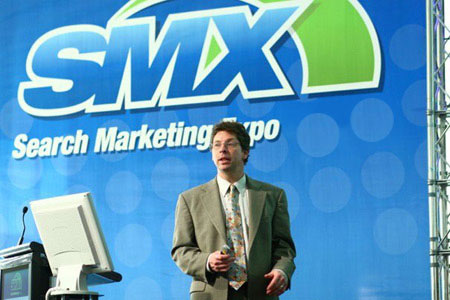 Session Description: Paid search lets you generate traffic from search engines by purchasing ads, usually on a cost-per-click (CPC) or pay-per-click (PPC) basis. This session covers the basics and current best practices of how to purchase placement from the major search engines, including the best ways to succeed with your ads, how to successfully measure performance and how to optimize your complete paid-search marketing strategies. Come join Danny Sullivan and several paid search experts in what promises to be an in-depth review of the paid search marketplace.
This session took place Wednesday, April 22, 2009. The speakers:
- Danny Sullivan, Editor-in-Chief, SearchEngineLand.com (Moderator)
- Mona Elesseily, Director of Marketing Strategy, Page Zero Media
- Chris Zaharias, VP, Search Sales, Omniture
- Nick Sheth, Director of Business Development, Gap Inc. Direct
Unfortunately the presenters talked really quickly, so I tried to get down as much as I could!
Bullet Point Review! Mona Elesseily:
- Get campaign architecture straight from the beginning.
- Think about keywords.
- Tap external sources.
- Proper tracking should be in place from the beginning.
- Is your company equipped to track?
- Define your PPC objectives.
- Tie the objectives to solid metrics.
- Tracking online conversion.
- Online order and pickup offline.
- Store location page.
- PPC local
- Focus on ad copy.
- Brainstorm.
- Product and Service descriptions.
- Calls to action.
- Offers.
- Features/Benefits.
- String things together after brainstorming.
- Brainstorm.
- Think “buying cycle”.
- Testing yields results!
- Get rid of extra information if it doesn’t impact conversions, doesn’t belong.
Nick Sheth:
- Know Your Trademarks.
- Register your marks with Google (including misspellings).
- Ensure you have clear, well communicated policy usage of marks by partners (affiliates, shopping engines, partners, etc.)
- Monitor your marks with a service
- Suggestions: AdGooroo, The Search Monitor, BrandVerity (I can personally vouch that this one is awesome), or Mark Monitor.
- Remember your domains (offensive and defensive).
- Suggestions: Alias Encore (which, again, I can personally vouch for), CitizenHawk.
- Hold domains that are even remotely related.
- Know Your Promotions & Offline Marketing Calendar.
- Calendar your promotions and share them with your agency and all digital marketing teams.
- Leverage offline marketing (buy terms, watch trends, use content ads).
- Finely tune search copy; don’t use blunt force – promotions should be relevant to your ad group.
- Work closely with marketing within your organization on all levels. Building trust is paramount to gaining the autonomy needed to execute quickly.
- Know Your Site.
- Landing page relevancy – right page for right copy and keyword.
- Product availability and assortment – consider using data feeds to automate.
- Dead pages – seems like common sense but there are a lot of ads out there that point to dead pages. Make sure you have internal tools and/or an agency to monitor pages.
- Know More About Your Site.
- Use on-site search to drive SEM & SEO.
- Use paid search to get ideas for SEO.
- Use SEO for paid search keyword ideas.
- Have a human review – don’t leave it all up to automation.
- Know What Works.
- Develop a culture of testing, including landing pages, copy, and promotions.
- Build a test budget into your annual P & L.
- Statistical significance is key.
- Maintain a testing plan that always has tasks and is consistent.
- Know Your Business.
- Understand your goals.
- Understand how you are moving the needle.
- Ensure you’re thinking about your portfolio optimization.
- Question branded search and answer: is it incremental?
- Look at everything holistically.
Chris Zaharias:
- Start -> key business requirements -> keyword research -> campaigns & ad groups -> syndicated strategy -> ad copy -> bid optimization -> analyze & conversions
- Business goals -> KPIs -> Optimization
- Use pre-defined metrics.
- Clicks, Impressions, Click-Through Rate
- Return on ad spend.
- Cost per Acquisition.
- Define and value customer metrics.
- Cart abandonment rate.
- Average Order Value.
- KPIs to measure branding.
- Multi-KPI Optimization.
- Search reacts to TV advertising.
- Measure across channels.
- There’s a myth that the long tail keeps growing – this isn’t true.
- The long tail is now in reverse.
- People are using search as navigation – i.e. they already know what they’re looking for but they go to a search engine to find it easily instead of typing in the URL directly.
- Assumptions:
- The long tail keeps growing.
- There’s 1001 things to do in search.
- PPC = Traffic Management.
- Listen to your search engine.
- Reality:
- Win the head, win the battle.
- Return on efficient, defined work flow.
- Pre & post-click are equally important.
- Search engine advise is often a contrary indicator.
I don’t have any notes from a question period, and I definitely don’t remember there being time for questions. Overall this was a completely useful session for me, given that I’m not an old hat at PPC marketing. It was presented very well and clearly thought out. I appreciated the slide presentations that all three presenters used and I only wish they’d shared them online somehow!
Read MoreWeb 2.0 Expo: Optimize Your Organic Search Results Leveraging Social Media & Blogging
 Session Description: I’m all a Twitter ‘Cause your MySpace hurts my Facebook when I’m Linked-in – Learn how to leverage social media and your current website to DOMINATE search engine results and improve your organic rankings! Sponsored by Verio.
Industry expert and published author Heather Lutze gives you the rundown on her social media strategies from her new book, The Findability Formula. This breakout will give you actionable tactics you can implement immediately to get your website ranked higher in search engine results. Social media is HOT and delivers results if you know how to use them to their fullest potential. Learn how to use keywords effectively with Twitter, Linked-In, Youtube, Facebook, as well as your own company website to increase your search engine rankings. It is all about knowing and understanding the Findability Formula – and that is what you’ll learn in this workshop!
This session took place Thursday, April 2, 2009. The speaker:
- Heather Lutze, Lutze Consulting
Heather had a lot of great things to say; it was a shame that she didn’t have enough time to really go over it because of such a long pitch by Verio, the sponsor of the session. One thing Verio did that was annoying but I can’t really fault them for, was parking someone at the door and using the leads scanner to scan the name badges of the people coming in. Annoying, but since they were sponsoring the session, I can’t really fault them for it.
Bullet Point Review!
- Social media gives you a platform to position yourself as an expert in your field.
- Strategy:
- Connect with the right search keywords.
- Edit your social media profiles and elements with keywords.
- Track the results in Google search results.
- Know how users search:
- 15.2% are 1 word search phrases
- 31.9% are 2 word
- 27% are 3 word
- 14.8% are 4 word
- 6.5% are 5+ words
- The longer the keyword, the faster you’ll show up.
- Longer search terms are looking more to purchase, less informational or shopping.
- Resources: Don’t Make Me Think by Steve Krug and The Long Tail by Chris Anderson.
- Tool: Google External Keyword Tool
- Tool: Keyword Discovery
- Connect with the customer when they’re ready to take decisive action.
- Misspellings can rank highly (sometimes they convert higher).
- Look at the pages and be sure you actually want to show up amongst that company.
- Anything over 100 searches, long tail.
- Open tool, whats most targeted keyword, then write blog post (put the keyword at the front).
- Recommends All in One SEO Pack, ShareThis for WordPress.
- On LinkedIn, when you put your last name in put a dash and your keyword.
- Start on the long tail and work your way backward.
- Do it for your name, do it for misspellings, rank the whole page to push out the “sucks” terms.
Because of the 20 minute pitch for Verio at the beginning of the session, there was zero time for questions, which was a shame. I was hoping for some more real-world examples that weren’t just about Heather. There was time for one where a woman who is a voice-over talent was looking at it from her standpoint and Heather walked through the practical application, which was pretty cool.
Overall it was a good session once Verio was done talking, and I wish she’d shared her slides with the Web 2.0 Expo folks, but alas it’s not on their website.
Read MoreAffsum Session: Reaching Aggressive Goals without Monetary Incentives
Date: Monday, January 12th, 2009. Session 4c, 11:30am.
Session Description: This session outlines how to best manage affiliate relationships to reach major revenue goals without additional budget. Tactics focus on non-monetary incentives to increase affiliate performance. The panel consisted of:
- Chris Kramer, Co-Founder & Media Director, NETexponent (Moderator)
- Darren Eilers, Founder & CEO, DME Media, LLC
- David Lewis, CEO & Founder, Cashbaq
- Kevin Smith, Affiliate Marketing and Business Development Manager, Brown Shoe Co. – Shoes.com
OK, this session wasn’t what I expected it to be. It seemed more like a session on how to treat or work well with super affiliates, which I’ve attended before and got kind of the same tips from. Maybe I perceived this wrong, but I expected some tactics on how to creatively promote affiliate programs without money, but it turned out to be how to fire up your top affiliates, and still mentioned money.
Bullet Point Review!
- The majority of affiliates say they make most their money from less than 5% of the merchants they promote.
- David says: compensation does matter. We’re willing to promote products and brands with zero compensation up front.
- David says: if you know our business, we’ll talk to you. Without knowing that basic fact, all of the other things you can say don’t matter.
- Darren says, to managers: relationships matter. Keep in mind that everyone does things differently. They do expect a better relationship than any other affiliate.
- Darren says, to fellow affiliates: You can’t expect a merchant to call you back unless they have an incentive to. So the affiliate has to sell you on themselves. Pitch you.
- David says: the compensation has to sometimes be different for loyalty sites. Get datafeeds cleaned up. Better sales will come from that and the creativity affiliates use with datafeeds.
- Darren acknowledges: we know that it’s sometimes an uphill battle for merchants to get the datafeeds fixed by their IT departments, but if the affiliate doesn’t get the datafeed that’s clean, they have to go with someone else.
- David notes that he’s personally working hard to create a standard taxonomy that everyone uses for datafeeds to make that portion of the industry more uniform.
- The key is keeping it updated.
- Chris noted that the number 1 thing affiliates wanted from them are custom landing pages. The second was product feeds, third promotions and incentives, and fourth was coupon code offers.
- Kevin wants affiliates to know that they can get help when they need it. The more information we as merchants can give the affiliate, the more money they make, more sales for us.
- David warns that the conversions really have to be solid. It’s better for the merchant and the affiliate.
- Kevin includes information about the products and company in their newsletter. He tosses out as much information as he can that will help the affiliates.
- It’s hit & miss in terms of the merchant giving information to the affiliate in terms of what they’ll use.
- A lot of the money they make is reinvested.
- David uses an analogy of a bobsled team for the merchant. They’re the head of the team and just need the push from the merchant to get rolling down the track.
- Darren advises that you take your top affiliates and let them help you test landing pages. He’s usually willing to work with merchants that ask for that kind of help since he’ll ultimately receive the benefit.
- Chris warns though that a lot of affiliates don’t want to be guinea pigs and how often are you willing to take the risk? Darren responded that it depended on how long he’s worked with and trusts the merchant. He doesn’t mind being a guinea pig if it means he can make more money.
- David warned against merchants making knee-jerk reactions. Use the data and make decisions based on that.
- Darren says if you know them and spend the time to get to know their business and form a partnership, merchants are usually more willing to give them inside data to help them out.
- Are there three different teams compensated separately? Many merchants have the SEO team, SEM team, and Affiliate team. If the program is run correctly the affiliates help all three teams. it’s all of our sales, not my sales or your sales.
- Kevin says more affiliates looking at CPM than CPA – with the economy there’s not as much money out there for CPA offers anymore since they don’t return like sales do.
- David relayed something he read that said 73,000 stores will close in the US this year (estimate). If someone comes to them and says they’re cutting their commissions, it’s a mistake but OK, they’ll look at your competitors more. Someone has something similar and will boldly raise their commissions to stand out.
- Darren warns that before you lower commissions across the board, take a look at your top affiliates. Weed them out and tier your structure. Maybe increase compensation for the top affiliates and lower it for the others.
- David says to reward those meeting your goals.
- Kevin notes that they did that and it worked great.
- Kevin adds not to be knee-jerk reactionary. Try to look at a monthly picture. For them the 2nd Saturday of every month is their big Saturday Sale, and affiliates know that. Being transparent helps them stand out. Allow them to lean on the merchant. Brand equity is very important.
- Kevin has seen more volume with coupons and loyalty sites.
- Chris shares more poll results amongst affiliates: What matters most before joining? 1. Commissions 2. Product being sold 3. Brand 4. Tracking platform 5. Terms and conditions 6. EPC 7. Affiliate manager/outsourced program managers 8. Return days 9. Action occurrences
- Darren says to look at your affiliate manager very closely to analyze the relationship. When the AM gets to know what the affiliate does, they can customize incentives specifically for them.
- Darren also says to give your top affiliates your true top performing keywords.
- Chris asks if a big brand can get away with paying less commissions. Darren says they can if their conversion rates are higher.
- Chris asks how much competitive research do you do? Darren says they know what the published commission rate is. They also look at the EPC but that doesn’t really tell them too much.
- David notes that they’re big and kind of already have the big brands, so they ask different questions before they join a new program. Are you making our life easy? Do you have an 88×31 non-animated gif? Do you link to the homepage or deep link? Is it something we think our members will see as quality? Does it look like it’ll convert?
- Darren says he’ll try to get a hold of the affiliate manager to work with them to improve their site, but there’s only so much they can do so sometimes it’s hard to do that.
- Kevin creates banners on a daily basis. They’ll accommodate different sizes if asked.
- Although David says he doesn’t look at banners. Darren advises that they have to meet the challenges of Google changing, so they need to change. Banners have been around so long and they’re surprised that there’s still so much emphasis on banners. They do their own creative because it’s faster and they know what will work with their visitors. If the merchant won’t allow that, it’ll hurt them. They’ll work within their guidelines for sure.
There was a lot of good information and wasn’t much time for a Q&A session, so there was none. Despite it not being what I was going in for, it was still a good session and dropped some handy tips from some top affiliates. There was also some good data points in the slides, so here they are for your viewing pleasure as well:
Read MoreOnline Marketing Glossary: Interactive Agency
Interactive Agency:
- An agency offering a mix of Web design and development, Internet advertising and online marketing, or e-business/e-commerce consulting.
 Speak of the devil, we finally come to a definition that describes my new company, New Edge Media! We offer PPC, SEO, Affiliate Marketing, and Email Marketing. Some stop by and take a look!
This actually concludes this series of glossary items! Huge thanks to Alexandra Wharton for having written this article and to Lisa Picarille for allowing me to republish them!
Have a series you want to see? Please feel free to leave a comment and let me know!
____
Glossary Definition From ABC’s of Online Marketing by Alexandra Wharton, Issue 22, Revenue Magazine


