

Affiliate Marketing Fanatics 49: Interviewing Stephanie Lichtenstein, Lisa Picarille, & Lisa Riolo
Podcast: Play in new window | Download
Affiliate Marketing Fanatics – A couple of hyper-caffeinated affiliate marketers (Mike Buechele) and (Trisha Lyn Fawver) talk about all things Affiliate Marketing. From blogging to branding, social media to search, video and more!
Presenting the last in our series of interviews with speakers at Affiliate Summit West 2011, coming up next week at the Wynn Casino in Las Vegas. This time, we talk to Stephanie Lichtenstein, Lisa Picarille, & Lisa Riolo about their panel “Profit from Trendspotting”. Fourth panelist Scott Jangro was unable to join us, but we reference him plenty! In in this episode we discuss:
- The panelists include Scott Jangro of Mech Media, Stephanie Lichtenstein of Micro Media Marketing, Lisa Picarille of MyContentPro.com, & Lisa Riolo of Impact Radius.
- Lisa Picarille is the brain child of the panel, having spoken on trend spotting before at previous conferences.
- Stephanie will be discussing some different techniques to spot trends in the marketplace & pop culture.
- They’ll review the types of trends and how to spot them & how to make money!
- Check out http://bit.ly/dO0cxE for a live example of how the new question asking technology works.
- Reach out on Twitter to them: @jangro, @lisap, @lisariolo, & @microsteph or find their brands on Twitter if you’re interested in doing business with them: @MyContentPro1, @ImpactRadius, & @MicroMediaMktg
Want to catch up with us & ask questions for the next show? Find us on Twitter: @AMF_Podcast, @MikeBuechele & @TrishaLyn. Like us on Facebook! You can also ask Trisha questions through FormSpring.me. Or leave us a comment!
Special thanks to GeekCast.fm for hosting Affiliate Marketing Fanatics.
Read MoreASW10 Session: Product Datafeeds: The Next Level
Session Description: Product datafeeds are among the most powerful tools available to affiliate marketers. We’ll discuss the current state of datafeeds and industry progress, best practices, and moving toward standards. The panel consisted of:
- Scott Jangro, President, Mech Media Inc. (Moderator)
- Larry Adams, Product Manager, Google
- Shergul Arshad, VP Business & Corporate Development, StyleFeeder, Inc.
- Brian Smith, CEO & Founder, SingleFeed
The panel was really well organized. Scott asked questions and then each panelist answered. I did my best to note the questions Scott asked and who each answer came from.
Bullet Point Review!
- Have you seen innovation in datafeeds?
- Larry: Haven’t seen a lot of innovation on the advertiser side, but have seen innovation from publishers. Deriving interesting information from feeds to actually provide some value. Taking this huge library & simplifying it. GAN is trying to figure out how to make the data more accessible & easier to consume. Easier for the publisher to get what they want out of it. The networks’ role is to be a facilitator. They push advertisers to get highest quality data and make sure as many publishers who want the data can access it.
- Shergul: 30% of the datafeeds they work with are truly excellent, 40% just acceptable, and the rest they have to mess with. 30% aren’t in the right format, and not just smaller programs but some are from big retailers. They’re on a campaign to try to help improve this and they reach out to the merchants. Sometimes merchants need to be shown what they’re missing by not providing accurate data. It’s easier for people to take advantage of open source tools to innovate so more people want to access datafeeds to automate sites. It’s hard to envision a one-size-fits-all datafeed.
- Brian: Not much has changed, but in the last 18 months datafeeds have become more complex. More attributes are being asked for from the merchants. That’s a good, positive sign. It does kind of screw things up for merchants trying to format new feeds in different formats. Merchants are starting to recognize datafeeds are great, and they’re looking for the next great channel. NOw they’re being forced to deal with datafeeds.
- There’s been more development of product APIs instead of downloading text files. Is API going to take over datafeeds?
- Shergul: API are more accessible when you’re pulling in fewer feeds. Using thousands of datafeeds just isn’t scalable. There’s a place for coexisting, but in general for speed and size constraints, they can’t shift towards APIs.
- Brian: Some publishers don’t know how to use APIs, so it’s going to take awhile for publishers to move over there and mostly they’ll coexist for awhile.
- Larry: The nice thing about an API is the data is fresher. GAN integrated with Google Base because they have a nice API. Working to provide more keyword targeted ads.
- Scott: Data has never been more accessibly and most networks now offer free access.
- If someone is just starting out, how should they start?
- Larry: Start small. Deal with usefullness before scale. Find out who has the best feeds and start easy. Figure out how you’re going to use them & then you can figure out ways to imprve the bad data or ignore it until the advertiser provices high quality fdata. Literally tens of millions of products are available to you. You don’t need every single product on your site to have a good user experience. There’s a fine line between copying and searching for inspiration. Don’t do what your competitors are doing – but shop there and find what you like and dislike in the shoes of a consumer and improve upon that.
- Shergul: It depends on what your site does. It’s manageable to access the “right” 20 datafeeds to be comprehensive in your vertical. Too man products can get too big and too overwhelming too quickly.
- Brian: Go after high quality. You might as well start with APIs and they have a wealth of information you can access. Make some calls & learn more about them. Start from there. Look at the big guys pushing great data – Amazon, eBay, Shopping.com.
- What are the major hurdles in getting “good datafeeds” to a higher number?
- Larry: That’s more of a merchant problem than a network issue.
- Brian: The networks need to sell datafeeds better. Case studies will work.
- Is there hope for standardization? Can we? What does it really mean?
- Larry: The first thing that comes to mind is categories. Building a common taxonomy that works for millions of products and thousands of merchants.
Points brought up during the Q&A
 Shergul: Positive examples of great datafeeds and data quality: Nordstrom, Shoe Buy, Target, CSN Stores.
- Larry: It can seem like a daunting task to improve a feed, but start small with one category to see if there’s a payoff on the work you’ve put in. Then you can more easily convince your boss it’s worth the time.
- If you have duplicate products, would you suggest changing the descriptions to avoid dupe content?
- Use your own analytics to pick the best product and dump the other one; there are enough products that you don’t need to worry about using both.
I hope I got comprehensive notes. I was trying my best to pay very close attention, but I have to admit that I got lost in some parts. By nature, it’s a dry subject, and though the presenters were doing their best to keep it lively, that early of a time slot might have not been the best. Here’s the presentation:
NoFollow vs. DoFollow
 First, the definition, courtesy of Dot Traffic Glossary:
Nofollow
A website can direct a search engine spider not to follow a link that appears on it. The idea being that the target website’s ranking will not influence the website indexed. Nofollow attribute values are most often used on sites with user generated content, like user comments and blogs.
Dofollow is basically the opposite of this. Many bloggers refer to this as link love. By allowing the search engine spiders to follow those links, you’re increasing their page rank status and allowing their ranks to influence your rank. Which is not what you want if you’re looking to increase your page rank, necessarily.
There’s a debate raging amongst bloggers and it seems like most smaller blogs are going the Dofollow route. By spreading the link love you’re helping out your fellow bloggers, who are more inclined to reciprocate. Blogroll’s are a prime opportunity for this. The larger bloggers don’t seem to be weighing in on the issue (at least not from what I’ve seen) so perhaps for a blogger with a larger audience they couldn’t care one way or the other.
Since this is a bit outside my expertise, I’ll admit, I posed the question to my 59 Twitterati followers for their opinions:
Shawn Collins of Affiliate Tip: “Event with nofollow in my blog comments, the comment monkeys constantly attack with their spam.”
Scott Jangro of MechMedia: “I’ve been fighting so hard with the spammers recently, I’m starting to question my own long-time use of dofollow.” He also added “I agree with Sam on the size of the blog though. Mine was until the past few days a PR6 which has me on every must-spam list.”
Sam Harrelson of ReveNews & Affiliate Fortune Cookies: “I’m all in favor of spreading the love, but there are SO many gamers out there that it makes DoFollow really unsustainable.” He followed up to say “Would just add that if it’s a small blog, you might make dofollow work. As it grows, it’s just too hard.”
Of course, these opinions totally fall in line with that I’ve observed in looking around. The little guys are all for dofollow to get the word out, but once you cross that line you become a “comment monkey” target. Scott Jangro wrote a really reflective post about it back in February called Attack of the Comment Monkeys (don’t know how I missed it from the RSS feed…).
I think one thing all bloggers and internet marketers in general can agree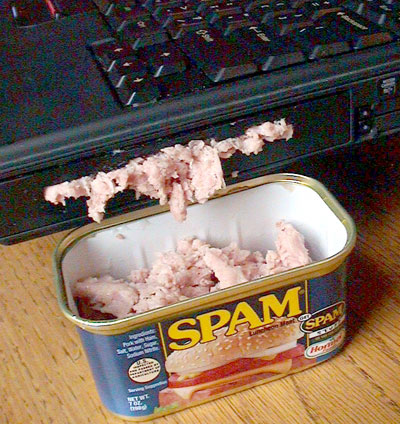 on is that Spam is a problem. Not only is it definitely annoying, but it also pollutes the well (as Jason Calacanis pointed out in his keynote at Affiliate Summit West last month). It makes a lot of legitimate internet marketing look bad, and it’s a fine line before someone misunderstands persistent follow up and due diligence for the dreaded SPAM label.
Where do I stand? Long time readers of this blog will note that I use links a lot in my posts. Basically I do this for two reasons: 1. I like to give readers an easy reference of what or who I’m talking about. 2. It’s just nice karma. This blog is hosted by Blogger, and according to their Help Center they automatically add the nofollow tag to the templates. Which is probably why I have a page rank of 0.
So I’m going to edit my template as an experiment. For anyone else curious on how to do this for blogger, there’s a great tutorial online here. Let’s see what happens, shall we?
Read More


