

ad:tech San Francisco: Master Class Workshop: Kick-Ass Creative—Left Coast Style
Session Description: Leading Left Coast creative directors showcase a cross section of innovative digital and integrated work for multiple clients including the strategy behind each campaign and the related pieces that supported the work. Learn from these master class creative directors about how to inspire and harness the big idea in an increasingly digital world dominated by fragmenting media and attention spans. What customer insights and trends spark new ideas and how do leading creative directors factor in evolving trends such as on-demand media and user-generated content when developing campaigns? This is the place to be to see the latest examples of strategic and tactical creative thinking and execution.
This session took place Wednesday, April 22, 2009. The speakers:
- Conor Brady, Chief Creative Officer, Organic (Moderator)
- Niels Aillaud, Senior Manager Digital Marketing, LG Electronics
- Scott Briskman, VP, Executive Creative Director, Agency.com San Francisco
- Jared Cluff, VP, User Acquisition, Ask.com
- John Rabasa, Executive VP, Managing Director, Publicis Modem West
Unfortunately this sessions was really a long brag session from LG and Ask.com. While the television media they showed was funny and entertaining, I expected this “master class workshop” to actually teach me a few things. Maybe some tips on creating engaging creative? Nope. So I was pretty let down and I only have a few notes for you.
Bullet Point Review! LG Electronics:
- Markets may be conversations, but make sure you are invited.
- Social media is about two things: context and people.
- Participation is good but creative participation is better.
- A good campaign is organic and will want to keep going.
- If your brand is befriended (e.g. on Facebook or Twitter), be a friend back.
Ask.com:
- Positioned Ask.com as an answer engine.
- Video ads delivered an 80% reduction in CPC.
- Crawls were 4 times better – higher traffic than traditional 15 second spots.
- They were surprised by the top performing question they asked – Who is Kim Kardashian?
- The agency is not bringing ideas that are exciting to them just because they’re exciting – they’re bringing them because they make sense for their business.
SMX @ ad:tech: Paid Search Fundamentals
 Session Description: Paid search lets you generate traffic from search engines by purchasing ads, usually on a cost-per-click (CPC) or pay-per-click (PPC) basis. This session covers the basics and current best practices of how to purchase placement from the major search engines, including the best ways to succeed with your ads, how to successfully measure performance and how to optimize your complete paid-search marketing strategies. Come join Danny Sullivan and several paid search experts in what promises to be an in-depth review of the paid search marketplace.
This session took place Wednesday, April 22, 2009. The speakers:
- Danny Sullivan, Editor-in-Chief, SearchEngineLand.com (Moderator)
- Mona Elesseily, Director of Marketing Strategy, Page Zero Media
- Chris Zaharias, VP, Search Sales, Omniture
- Nick Sheth, Director of Business Development, Gap Inc. Direct
Unfortunately the presenters talked really quickly, so I tried to get down as much as I could!
Bullet Point Review! Mona Elesseily:
- Get campaign architecture straight from the beginning.
- Think about keywords.
- Tap external sources.
- Proper tracking should be in place from the beginning.
- Is your company equipped to track?
- Define your PPC objectives.
- Tie the objectives to solid metrics.
- Tracking online conversion.
- Online order and pickup offline.
- Store location page.
- PPC local
- Focus on ad copy.
- Brainstorm.
- Product and Service descriptions.
- Calls to action.
- Offers.
- Features/Benefits.
- String things together after brainstorming.
- Brainstorm.
- Think “buying cycle”.
- Testing yields results!
- Get rid of extra information if it doesn’t impact conversions, doesn’t belong.
Nick Sheth:
- Know Your Trademarks.
- Register your marks with Google (including misspellings).
- Ensure you have clear, well communicated policy usage of marks by partners (affiliates, shopping engines, partners, etc.)
- Monitor your marks with a service
- Suggestions: AdGooroo, The Search Monitor, BrandVerity (I can personally vouch that this one is awesome), or Mark Monitor.
- Remember your domains (offensive and defensive).
- Suggestions: Alias Encore (which, again, I can personally vouch for), CitizenHawk.
- Hold domains that are even remotely related.
- Know Your Promotions & Offline Marketing Calendar.
- Calendar your promotions and share them with your agency and all digital marketing teams.
- Leverage offline marketing (buy terms, watch trends, use content ads).
- Finely tune search copy; don’t use blunt force – promotions should be relevant to your ad group.
- Work closely with marketing within your organization on all levels. Building trust is paramount to gaining the autonomy needed to execute quickly.
- Know Your Site.
- Landing page relevancy – right page for right copy and keyword.
- Product availability and assortment – consider using data feeds to automate.
- Dead pages – seems like common sense but there are a lot of ads out there that point to dead pages. Make sure you have internal tools and/or an agency to monitor pages.
- Know More About Your Site.
- Use on-site search to drive SEM & SEO.
- Use paid search to get ideas for SEO.
- Use SEO for paid search keyword ideas.
- Have a human review – don’t leave it all up to automation.
- Know What Works.
- Develop a culture of testing, including landing pages, copy, and promotions.
- Build a test budget into your annual P & L.
- Statistical significance is key.
- Maintain a testing plan that always has tasks and is consistent.
- Know Your Business.
- Understand your goals.
- Understand how you are moving the needle.
- Ensure you’re thinking about your portfolio optimization.
- Question branded search and answer: is it incremental?
- Look at everything holistically.
Chris Zaharias:
- Start -> key business requirements -> keyword research -> campaigns & ad groups -> syndicated strategy -> ad copy -> bid optimization -> analyze & conversions
- Business goals -> KPIs -> Optimization
- Use pre-defined metrics.
- Clicks, Impressions, Click-Through Rate
- Return on ad spend.
- Cost per Acquisition.
- Define and value customer metrics.
- Cart abandonment rate.
- Average Order Value.
- KPIs to measure branding.
- Multi-KPI Optimization.
- Search reacts to TV advertising.
- Measure across channels.
- There’s a myth that the long tail keeps growing – this isn’t true.
- The long tail is now in reverse.
- People are using search as navigation – i.e. they already know what they’re looking for but they go to a search engine to find it easily instead of typing in the URL directly.
- Assumptions:
- The long tail keeps growing.
- There’s 1001 things to do in search.
- PPC = Traffic Management.
- Listen to your search engine.
- Reality:
- Win the head, win the battle.
- Return on efficient, defined work flow.
- Pre & post-click are equally important.
- Search engine advise is often a contrary indicator.
I don’t have any notes from a question period, and I definitely don’t remember there being time for questions. Overall this was a completely useful session for me, given that I’m not an old hat at PPC marketing. It was presented very well and clearly thought out. I appreciated the slide presentations that all three presenters used and I only wish they’d shared them online somehow!
Read Moread:tech San Francisco: Performance Marketing – Getting the Most from Your Marketing Dollar in a Tough Economy
Session Description: How can marketers get the most from their budgets in a difficult economic climate? We’ll explore how to attain more from a smaller budget via performance marketing with practical, tactical solutions. We’ll look at the pros and cons of allocating dollars to performance marketing and we’ll discuss what technological innovations are coming to the performance marketing space that will maximize budgets and minimize challenges.
This session took place Wednesday, April 22, 2009. The speakers:
- Neil Strother, Analyst, Forrester Research (Moderator)
- Peter Bordes, CEO, MediaTrust
- Steve Schaffer, Founder and CEO, Vertive
- Jarvis Mak, Senior VP, Global Research and Insights Director, Havas Digital
- Kelly Powers, Senior Manager, Customer Acquisition, Zazzle
This session was definitely geared towards those marketing and advertising professionals that are not already in the performance marketing game. It was very insightful to watch from that point of view in mind.
Bullet Point Review!
- Neil asks “What is performance marketing?”
- Paying only for results, whether those results are leads, referrals, a percentage of the sale. Advertisers get to determine how much they pay.
- You can leverage your affiliates to assist with your paid search efforts.
- You need to have good landing pages.
- What’s the real value of the actions being driven?
- What you’re paying for is marketing.
- Affiliates have more incentive to drive more qualified traffic and customers.
- Affiliates drive higher conversions, average orders.
- There’s three types of advertising, CPM, CPC, and CPA.
- Merchants only want to pay one touch point for the sale.
- There’s a mentality that affiliates are frowned upon; CEOs will be wary of the methods but CFOs will be excited about the value and efficiency of the channel.
- AM is very data driven – more money is shifted towards traceable marketing.
- Executives need to understand affiliate marketing; the whole industry is misunderstood.
- Industry is starting to get the data out and break through the black box and lack of transparency.
- Peter briefly explained what’s going on with the #advertisingtax to the crowd.
- A couple of states have been able to stop the #advertisingtax but it’s moving fast.
- Fraud has grown exponentially, especially in lead gen.
- Paying for leads welcomes fraud in som,e industries, ask yourself if you can pay for a different action.
- A major player will soon announce a ranking system (Peter couldn’t divulge who).
Points brought up during the Q&A
 Is there a metric to show brand safety? No. It’d be nice to take the focus off the brand.
- Yes you need brand awareness, but that’s not going to drive a sale. The best offer is.
- It’s not infinitely scalable; you can always throw more money at search, etc. but throwing more money at affiliate marketing doesn’t work because the core is the relationships.
- Amazing how much more some merchants pay on other marketing methods and channels over affiliate marketing.
- Advertisers need to do a better job at attribution to track the sales to the correct channels.
- Feel free to launch new products with affiliate marketing; it has worked in the past when done right.
- What are some practical takeaways?
- Continue to optimized
- Work on attribution
- Look at marketing channels as a holistic portfolio.
- Focus on better, fewer networks and don’t spread your program too think.
The Q&A portion wasn’t so much a traditional Q&A as it was a case study like discussion. The panel really wanted to help with real examples, and only one gentleman in consumer finance was willing to ask for assistance.
Read MoreWeb 2.0 Expo: my.barackobama.com: The Secrets of Obama’s New Media Juggernaut
 Session Description: Marketers and activists alike have taken notice of the strategies and tactics that helped put Barack Obama in the White House. Jascha will discuss the tools and techniques used by the presidential campaign’s record breaking online efforts. In addition to telling the inside story of the campaign’s online engagement efforts, he will also discuss how these strategies and tools can be applied to a variety of other sectors beyond politics.
This session took place Friday, April 3, 2009. The speaker:
- Jascha Franklin-Hodge, Blue State Digital
This was a great session and was packed to the gills with people, of course! The My.BarackObama.com site has been hailed as one of the chief reasons Obama won. It was great to hear the creator of this site speak.
Bullet Point Review!
- Blue State Digital – design, technology, strategy.
- Obama 2008 By The Numbers
- 1 billion emails to 13 million email addresses.
- Over 1 million SMS subscribers.
- 200,000 offline events planned via the website (non-official).
- 35,000 local volunteer groups.
- 14.5 million YouTube viewing hours (this is a conservative estimate; it doesn’t include embedded or UGC.). This would have cost $40-50 million had it been traditional, purchased air time.
- $770,000,000 raised (35% offline, 65% online).
- Professionals tapped into the grass roots efforts.
- How we did it?
- Drive Action
- No such thing as too much email, just too much unwanted emails.
- Match the action to the medium.
- Doesn’t work to just shoehorn your existing web experience to every medium.
- Set high expectations.
- Be Authentic
- No Press Releases and people don’t read newsletters.
- Personalize communications
- Example: personal note from Al Franken after donation.
- Go behind the scenes.
- Create Ownership
- Turn users into advocates.
- Traditional donation matching is one wealthy donor <-> existing + new donors.
- Grassroots donation matching is existing <-> new donors.
- It’s not about me + large organization; it’s about all of us together.
- Recognize your leaders and engage them.
- Invite people to participate.
- Create user content and share the best.
- Solicit ideas from people and use the ones that make sense.
- Connect people with each other.
- Be Relevant
- #1 Obama fundraiser: Sarah Palin.
- Within 24 hours after the end of her first speech, campaigned raised $11 million via email and some organic donations.
- Don’t just react, anticipate.
- Build a Strong, Open Brand
- Brand professionally
- Brand consistently (don’t forget your plane!).
- Empower people to do interesting things.
- They might paint their barn.
- Or illuminate their bike.
- Or create iconic artwork (Shepherd Ferry HOPE Poster).
- Measure Everything
- Emails, online advertising, engagement, fund raising, persuasions, election activities.
- Do at least A/B Testing, if not multivariate.
- Drive Action
Points brought up during the Q&A
- Have you considered a grass roots tool kit for local organizations?
- As a business, Blue State Digital isn’t at the point where they can do that.
- 1 or 2 most unexpected lessons?
- How important it is not to underestimate people.
- Was there also traditional marketing to drive people to the website?
- Not really, but there were Google PPC ads.
- What one thing would you have fixed retrospectively?
- Start earlier and work on scalability. Build with a longer term vision in mind.
- If the other side level the tech playing field and catch up, will Democrats keep an advantage?
- Yes, Republican’s challenge isn’t the tech, it’s their culture.
- They need to recognize this cultural gap before they can keep up.
- Democrats will keep innovating to keep an advantage.
- Did you measure demographics?
- Yes, average age of website user was 37. Surprised by age diversity.
- Bounced ideas of his own mom to make sure they appealed to a broad audience.
Overall this was a great session to end the conference on.
Read MoreWeb 2.0 Expo: Towards a More Open Union: Ways for Us to Change America
 Session Description: We have a unique opportunity now, as developers and designers to change our Government. From the FEC to Recovery.gov, new sources of data are beginning to pour out of Capitol Hill and state houses across the country. What kind of opportunities arise? But how do we developers use our skills to make this data compelling, useful and open. Sunlight Labs director Clay Johnson will discuss the story so far with Government data, where things are headed, and how you can help.
This session took place Friday, April 3, 2009. The speaker:
- Clay Johnson, Sunlight Labs.
So this was much more of a call to action on the part of developers, but it had some take homes for everyone.
Bullet Point Review!
- The Landscape
- Barack Obama “transparency and the rule of law will be the touchstones of this presidency”.
- Harry Reed “it’s time for open government, transparency, and it’s a time for results”.
- Nancy Pelosi “the internet is an incredible vehicle for transparency, honest leadership and open government”.
- John McCain “ethics and transparency are not election year buzz words; they are the obligations of democracy and the duties of honorable public service”.
- Democrats: helps keep the majority, rep helps take back the majority.
- Transparency makes healthier government.
- Wubbahed.com
- As they become more digitally immersed, they ask for less money in earmarks; digitally immersed = ethical?
- Recovery.gov powered by Drupal
- Transparency Opens Markets
- Open data coming out of the government is helping to increase markets for commerce (Google Maps, Weather.com are examples).
- Transparency Saves Lives
- FDA made a widget regarding the salmonella outbreaks.
- The Problems
- We have to meet the president half way.
- Public means online (a warehouse open in wash dc doesn’t cut it).
- We can’t afford to wait on government to get their stuff cleaned up.
- Sunlight Labs is a community of 466 (so far).
- How You Can Help
- Coding>Consensus
- If you do it for them, they’re faster to adopt than they are to decide to adopt.
- We don’t have much time.
- Every politician is kowtowing to transparency. May change by January next year when people start running for election again. Only have about 9 months to push the ball as far up the field as it’ll go.
- Issue -> Movement
- Be an Organizer
- Make sure people know each other’s names.
- Move them into the physical space.
- Make specific requests, but check your ego at the door.
- Convene a Hack-a-thon in your area.
- Parse a State (50 State Project)
- The laws your state legislature are passing are far more important.
- More local = more listening.
- More local = less technology.
- Redesign an Agency
- Federal websites are heinously ugly.
- Draw a picture for them of what their websites should look like – see them want to adopt your designs (Examples: USA.gov, Federal Elections Commission).
- Visualize Data
- CIO of the Federal Government wants to create data.gov with all the feeds and data.
- Visualizations tell stories.
- +1 Our Community
- Spread the word about Sunlight Labs to developers and hackers.
- Sunlightlabs@googlegroups.com
- Wiki.SunlightLabs.com
- Working on standardizing nomenclature in government documents (e.g. walmart, wal-mart, wlmrt all used in various documents, making searching hard).
- Steal this presentation
- Sunlightlabs.com/ignitepresentation
- Be an Organizer
- Coding>Consensus
Points brought up during the Q&A
- What can non-developers do?
- Join the list; it’s an open forum. Some stuff you might not understand but there’s other stuff you can help with.
- How do you solve the warehouse full of paper issue?
- A big scanner 🙂
- Some are handwritten scans and using volunteers to manually enter this data into a database.
- Data and technology will get us 80% there, the rest are actual eyeballs reviewing things.
- How can government help facilitate this?
- Bulk access to the data.
- API, rest based.
- Compelling user interface for ordinary citizens (IN THIS ORDER).
- Have you explored the limitations of transparency (money, CIA, DOD)?
- They’re not into hacking the FBI, they’ll know when they’re successful when the EEF complains about what they do. For the time being they’re allies. There are limits they tend not to cross. They know what info is sensitive and not to put online.
- Start with the open data and then remove what might be private, not the other way around.
Despite not being a developer, some of this is stuff that we can all pass on to our friends who ARE developers and attempt to make a difference.
Read MoreWeb 2.0 Expo: Navigating the Maze: How to Sell to the Public Sector
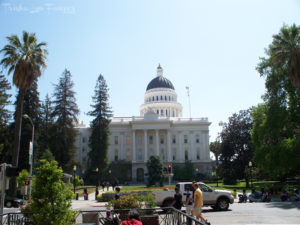 Session Description: Public sector agencies spend billions of dollars each year on contracts with IT providers, small and large. And with the changes in Washington and at the state level, there is a greater interest than ever in Web 2.0 tools and technologies in government. How can you determine if there is a need for your product or service in the public sector? How do you participate in those opportunities? How can you get your foot in the door? Why does is seem so hard? How can your firm can be a part of this dynamic marketplace? This session discuss some of the rules and constraints of dealing with public sector agencies and the opportunities which exist. Come and learn how the public sector entities buy products and services and how your business can become an active participant in this market.
This session took place Friday, April 3, 2009. The speakers:
- Carolyn Lawson, CA Public Utilities Commission
- Adrian Farley, Office of the CIO of California
Bullet Point Review!
- Virtually every agency within the state has a CIO.
- They all have a direct dotted line reporting to the state CIO.
- Mapping the public sector market.
- Size of the market (large and growing market).
- Trends.
- Priorities.
- Opportunities.
- Large and Growing Market.
- State of local government currently spending more than $60 billion annually on IT
- State of CA spends over $2 billion annually on IT goods and services.
- The market is expected to exceed $75 billion by 2011.
- Federal government spends more than $66 billion annually on IT – almost even split between civilian and defense.
- The Recovery Act includes bill more for health IT and other tech related spending.
- Total federal expenditure expected to exceed $80 billion by 2011.
- State of local government currently spending more than $60 billion annually on IT
- Government leveraging Web 2.0
- State of California agencies leveraging YouTube, Facebook, Twitter and other web 2.0 technologies to communicate with and engage the public.
- Focus is now on opportunities to realize real program value – improved outcomes, better service at lower costs – through web 2.0 tools.
- Federal government entered into agreements w/ YouTube, Flickr and others to enhance government services and improve internal productivity.
- CIA using Facebook for recruiting.
- The State Department, The Department of Defense, and Federal intelligence agencies.
- State of California agencies leveraging YouTube, Facebook, Twitter and other web 2.0 technologies to communicate with and engage the public.
- Policy priorities for state CIOs.
- Consolidation: centralizing, consolidating services, operations, resources, infrastructure.
- Shared Services: business models, sharing resources, services, infrastructure.
- Budget and cost control: managing g budget reduction, strategies for savings, reducing or avoiding costs, activity based costing.
- Security: security safeguards, enterprise policies, data protection.
- Electronic records management/digital preservation, discovery.
- ERP strategy
- Green IT
- Transparency
- Health IT
- Governance
- Tech Priorities for State CIOs
- Virtualization
- Document/Content/Email Management
- Legacy application modernization and upgrade
- Networking, voice and data communications, unified communications.
- Web 2.0
- Part of selling to the public sector is understanding the nomenclature.
- Looking at how to integrate social tools with search.
- Frame your solution within the context of what state CIOs feel is important.
- Know where their pain points are.
- Answer questions before they ask.
- Resources
- NASCIO
- California Office of the State Chief Information Officer
- Federal Business Opportunities
- BidSync
- Procurement: CA Department of General Services
- CA Multiple Award Schedules
- CA Small Business & DVBE Services
- Everything the individual agencies do has to align with the state goals.
- The purpose for what we do in IT is to meet the public need – no time to work with toys and “nifty things”.
- Carolyn: If you’re registered as a small business it’s easy for me to buy from you.
- One set of terms and conditions across the state.
- Each agency has a delegation, an amount of money they can spend before the process gets more difficult (extended procurement process)which can take up to 18 mo.
- This power point is gold to you!
- It’s a long process to get CMAS, but don’t get discouraged.
- The government wants what you have!
Points brought up during the Q&A
- Is any of the procurement system organized by science or across departments?
- Typically things are broken down by what they’re looking for.
- Less people are writing letters anymore, so they need more feedback from the people.
- As soon as you say web 2.0 their eyes are going to glaze over – talk about what these tools will do without relying on the web 2.0 word (as soon as you get to acronyms you’re pushed away).
- What are your feelings on software as a service?
- There are pockets of resistance but they’re people that fear software as a service means less work for them. The added value is in connecting with the program.
- Building an army of solution architects.
- Supportive of cloud computing if they’re the right fit for the business problem.
- There’s the fear of losing jobs but also the fear of losing control.
- There can be preferences based on location based businesses, whether you’re using a military base, only about a 5% preference. No preference on minority or women businesses due to Prop 209.
- How does the state define small and micro businesses?
- A small business is $10 million per year or less, or $30 million over 3 years. A micro business is $1 million or less of annual revenue.
- What’s the time frame on the CMAS process and can you bid on jobs during the process?
- It averages 30 days, sometimes up to 60 days. It’s based on the GSA (federal government pricing schedule). Find one thing that aligns with the product or service you’re offering. Complete the form thoroughly. If you don’t complete the whole thing, they’ll highlight what’s missing and send it back, starting the process all over again. No bidding during process.
- Small business only takes 10 minutes to apply on the website.
- Are there any restrictions on a US company representing a company based outside the US?
- Only if you’re incorporated in Bermuda or another country for the purposes of evading state or federal taxes. That’s the only real requirement.
- Recovery.gov
- Lots of people try to grease the rails; so public servants are extra diligent – many don’t even take private appointments to limit preferred access.
- Use broad and open process to make sure no one has more access than someone else.
- Trying to ensure it’s a level playing field.
- They want to find new and innovative ways, but they don’t want to cross lines and they want to be appropriate.
- Is there a schedule of vendor fairs?
- They do them around segments of architecture, not just for people they’ve already done business with.
- Government technology conferences?
- Plug for tech people to go there, govtech.com/events
Overall this wasn’t the best session of the Government 2.0 track, but it was insightful.
The slides are available for download here: Navigating the Maze: How to Sell to the Public Sector (PPT).
Read More


