

ASE09 Session: Advertising Tax Impact, Accomplishments and the Future

Guest Post by Dominic Fawver.
Session Description: Discussion on the Advertising Tax by industry leaders that have played a key role in organizing industry advocates and educating legislators on the impact of state tax nexus legislation. The panel included:
- Brian Littleton, President / CEO, ShareASale.com (Twitter @Brianlittleton) (Moderator)
- Karen Garcia, Partner, GTO Management (Twitter @karengarcia)
- Beth Kirsch, Volunteer, Performance Marketing Association (Twitter @bethkirsch)
- Melanie Seery, President, Affiliate Voice (Twitter @mellies)
This session was very informative and gave a lot of information concerning the current problems affiliate marketers are having with some of the new tax laws, or rather the new interpretations, of the tax laws. One of the most important facts given was that the definition of “Nexus” has been recently changed, or rather updated. For a business to have Nexus, they must by physically present in the state. The change in definition holds that affiliates living in a state count as Nexus in that state. This is important because it requires all of the merchants to charge their customers the state sales tax. The issue is not that the companies should charge this sales tax, but that it is often cheaper for them to drop their affiliates in whichever states are affected, instead of adding the ability to charge the sales tax on their site.
The chief purpose of this session was to bring people up to speed on the legislation that has been put into affect or has been defeated in several states such as New York, Hawaii, and California. This is important because it will soon affect any state that charges sales tax, which is most of them.
From the standpoint of someone new to the industry this was a very important session to attend, as it helped to bring me up to speed, so to speak, with some of the major issues which are currently impacting Affiliate Marketing.
Read MoreASE09 Session: Getting Noticed FAST
Guest Post by Dominic Fawver.
Session Description: Regardless what your role in the industry is, it’s important to be noticed within the industry. Learn the networking and social media techniques that make it possible. The panel consisted of:
- Lisa Picarille, Online Marketing Consultant, LisaPicarille.com (Twitter @lisap) (Moderator)
- Michael Buechele, Owner, MikeBuechele.com (Twitter @mikebuechele)
- Trisha Lyn Fawver, Affiliate Manager, Paulson Management Group (Twitter @trishalyn)
- Jen Goode, Doodler in Charge, JGoode Designs (Twitter @JGoode)
- Stephanie Lichtenstein, Affiliate Program Manager, Andy Rodriguez Consulting (Twitter @MicroSteph)
This session, Getting Noticed FAST, contained a lot of valuable information from people who have gone from being a nobody in Affiliate Marketing to being well known by many of the top people in just a couple of years. Some of the suggestions were:
“Get involved in the response…go to other sites and comment” Jen Goode
“Start blogging” Stephanie Lichtenstein
“Don’t flame people” Trisha Fawver
“Do something different the first time you meet in person” Mike Buechele
Many tips were given on the importance of using social media to get your name out there. Also mentioned was the importance of personal branding and being consistent between all of the different forms of social media that you are on.
From the standpoint of someone who is new to Affiliate Marketing, this was a very good session with plenty of examples from the panelist’s personal experience. It gave me ideas on where to start on getting noticed so that I can further a career in Affiliate Marketing (if I so chose) by meeting people who are already successful in the field and learn from their experiences and mistakes, while at the same time possibly being able to help them out with my own expertise. In many cases it is not what you know, but who you know.
ad:tech San Francisco: Master Class Workshop: Kick-Ass Creative—Left Coast Style
Session Description: Leading Left Coast creative directors showcase a cross section of innovative digital and integrated work for multiple clients including the strategy behind each campaign and the related pieces that supported the work. Learn from these master class creative directors about how to inspire and harness the big idea in an increasingly digital world dominated by fragmenting media and attention spans. What customer insights and trends spark new ideas and how do leading creative directors factor in evolving trends such as on-demand media and user-generated content when developing campaigns? This is the place to be to see the latest examples of strategic and tactical creative thinking and execution.
This session took place Wednesday, April 22, 2009. The speakers:
- Conor Brady, Chief Creative Officer, Organic (Moderator)
- Niels Aillaud, Senior Manager Digital Marketing, LG Electronics
- Scott Briskman, VP, Executive Creative Director, Agency.com San Francisco
- Jared Cluff, VP, User Acquisition, Ask.com
- John Rabasa, Executive VP, Managing Director, Publicis Modem West
Unfortunately this sessions was really a long brag session from LG and Ask.com. While the television media they showed was funny and entertaining, I expected this “master class workshop” to actually teach me a few things. Maybe some tips on creating engaging creative? Nope. So I was pretty let down and I only have a few notes for you.
Bullet Point Review! LG Electronics:
- Markets may be conversations, but make sure you are invited.
- Social media is about two things: context and people.
- Participation is good but creative participation is better.
- A good campaign is organic and will want to keep going.
- If your brand is befriended (e.g. on Facebook or Twitter), be a friend back.
Ask.com:
- Positioned Ask.com as an answer engine.
- Video ads delivered an 80% reduction in CPC.
- Crawls were 4 times better – higher traffic than traditional 15 second spots.
- They were surprised by the top performing question they asked – Who is Kim Kardashian?
- The agency is not bringing ideas that are exciting to them just because they’re exciting – they’re bringing them because they make sense for their business.
SMX @ ad:tech: Paid Search Fundamentals
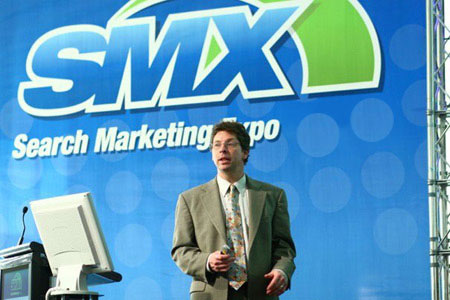 Session Description: Paid search lets you generate traffic from search engines by purchasing ads, usually on a cost-per-click (CPC) or pay-per-click (PPC) basis. This session covers the basics and current best practices of how to purchase placement from the major search engines, including the best ways to succeed with your ads, how to successfully measure performance and how to optimize your complete paid-search marketing strategies. Come join Danny Sullivan and several paid search experts in what promises to be an in-depth review of the paid search marketplace.
This session took place Wednesday, April 22, 2009. The speakers:
- Danny Sullivan, Editor-in-Chief, SearchEngineLand.com (Moderator)
- Mona Elesseily, Director of Marketing Strategy, Page Zero Media
- Chris Zaharias, VP, Search Sales, Omniture
- Nick Sheth, Director of Business Development, Gap Inc. Direct
Unfortunately the presenters talked really quickly, so I tried to get down as much as I could!
Bullet Point Review! Mona Elesseily:
- Get campaign architecture straight from the beginning.
- Think about keywords.
- Tap external sources.
- Proper tracking should be in place from the beginning.
- Is your company equipped to track?
- Define your PPC objectives.
- Tie the objectives to solid metrics.
- Tracking online conversion.
- Online order and pickup offline.
- Store location page.
- PPC local
- Focus on ad copy.
- Brainstorm.
- Product and Service descriptions.
- Calls to action.
- Offers.
- Features/Benefits.
- String things together after brainstorming.
- Brainstorm.
- Think “buying cycle”.
- Testing yields results!
- Get rid of extra information if it doesn’t impact conversions, doesn’t belong.
Nick Sheth:
- Know Your Trademarks.
- Register your marks with Google (including misspellings).
- Ensure you have clear, well communicated policy usage of marks by partners (affiliates, shopping engines, partners, etc.)
- Monitor your marks with a service
- Suggestions: AdGooroo, The Search Monitor, BrandVerity (I can personally vouch that this one is awesome), or Mark Monitor.
- Remember your domains (offensive and defensive).
- Suggestions: Alias Encore (which, again, I can personally vouch for), CitizenHawk.
- Hold domains that are even remotely related.
- Know Your Promotions & Offline Marketing Calendar.
- Calendar your promotions and share them with your agency and all digital marketing teams.
- Leverage offline marketing (buy terms, watch trends, use content ads).
- Finely tune search copy; don’t use blunt force – promotions should be relevant to your ad group.
- Work closely with marketing within your organization on all levels. Building trust is paramount to gaining the autonomy needed to execute quickly.
- Know Your Site.
- Landing page relevancy – right page for right copy and keyword.
- Product availability and assortment – consider using data feeds to automate.
- Dead pages – seems like common sense but there are a lot of ads out there that point to dead pages. Make sure you have internal tools and/or an agency to monitor pages.
- Know More About Your Site.
- Use on-site search to drive SEM & SEO.
- Use paid search to get ideas for SEO.
- Use SEO for paid search keyword ideas.
- Have a human review – don’t leave it all up to automation.
- Know What Works.
- Develop a culture of testing, including landing pages, copy, and promotions.
- Build a test budget into your annual P & L.
- Statistical significance is key.
- Maintain a testing plan that always has tasks and is consistent.
- Know Your Business.
- Understand your goals.
- Understand how you are moving the needle.
- Ensure you’re thinking about your portfolio optimization.
- Question branded search and answer: is it incremental?
- Look at everything holistically.
Chris Zaharias:
- Start -> key business requirements -> keyword research -> campaigns & ad groups -> syndicated strategy -> ad copy -> bid optimization -> analyze & conversions
- Business goals -> KPIs -> Optimization
- Use pre-defined metrics.
- Clicks, Impressions, Click-Through Rate
- Return on ad spend.
- Cost per Acquisition.
- Define and value customer metrics.
- Cart abandonment rate.
- Average Order Value.
- KPIs to measure branding.
- Multi-KPI Optimization.
- Search reacts to TV advertising.
- Measure across channels.
- There’s a myth that the long tail keeps growing – this isn’t true.
- The long tail is now in reverse.
- People are using search as navigation – i.e. they already know what they’re looking for but they go to a search engine to find it easily instead of typing in the URL directly.
- Assumptions:
- The long tail keeps growing.
- There’s 1001 things to do in search.
- PPC = Traffic Management.
- Listen to your search engine.
- Reality:
- Win the head, win the battle.
- Return on efficient, defined work flow.
- Pre & post-click are equally important.
- Search engine advise is often a contrary indicator.
I don’t have any notes from a question period, and I definitely don’t remember there being time for questions. Overall this was a completely useful session for me, given that I’m not an old hat at PPC marketing. It was presented very well and clearly thought out. I appreciated the slide presentations that all three presenters used and I only wish they’d shared them online somehow!
Read Moread:tech San Francisco: Performance Marketing – Getting the Most from Your Marketing Dollar in a Tough Economy
Session Description: How can marketers get the most from their budgets in a difficult economic climate? We’ll explore how to attain more from a smaller budget via performance marketing with practical, tactical solutions. We’ll look at the pros and cons of allocating dollars to performance marketing and we’ll discuss what technological innovations are coming to the performance marketing space that will maximize budgets and minimize challenges.
This session took place Wednesday, April 22, 2009. The speakers:
- Neil Strother, Analyst, Forrester Research (Moderator)
- Peter Bordes, CEO, MediaTrust
- Steve Schaffer, Founder and CEO, Vertive
- Jarvis Mak, Senior VP, Global Research and Insights Director, Havas Digital
- Kelly Powers, Senior Manager, Customer Acquisition, Zazzle
This session was definitely geared towards those marketing and advertising professionals that are not already in the performance marketing game. It was very insightful to watch from that point of view in mind.
Bullet Point Review!
- Neil asks “What is performance marketing?”
- Paying only for results, whether those results are leads, referrals, a percentage of the sale. Advertisers get to determine how much they pay.
- You can leverage your affiliates to assist with your paid search efforts.
- You need to have good landing pages.
- What’s the real value of the actions being driven?
- What you’re paying for is marketing.
- Affiliates have more incentive to drive more qualified traffic and customers.
- Affiliates drive higher conversions, average orders.
- There’s three types of advertising, CPM, CPC, and CPA.
- Merchants only want to pay one touch point for the sale.
- There’s a mentality that affiliates are frowned upon; CEOs will be wary of the methods but CFOs will be excited about the value and efficiency of the channel.
- AM is very data driven – more money is shifted towards traceable marketing.
- Executives need to understand affiliate marketing; the whole industry is misunderstood.
- Industry is starting to get the data out and break through the black box and lack of transparency.
- Peter briefly explained what’s going on with the #advertisingtax to the crowd.
- A couple of states have been able to stop the #advertisingtax but it’s moving fast.
- Fraud has grown exponentially, especially in lead gen.
- Paying for leads welcomes fraud in som,e industries, ask yourself if you can pay for a different action.
- A major player will soon announce a ranking system (Peter couldn’t divulge who).
Points brought up during the Q&A
 Is there a metric to show brand safety? No. It’d be nice to take the focus off the brand.
- Yes you need brand awareness, but that’s not going to drive a sale. The best offer is.
- It’s not infinitely scalable; you can always throw more money at search, etc. but throwing more money at affiliate marketing doesn’t work because the core is the relationships.
- Amazing how much more some merchants pay on other marketing methods and channels over affiliate marketing.
- Advertisers need to do a better job at attribution to track the sales to the correct channels.
- Feel free to launch new products with affiliate marketing; it has worked in the past when done right.
- What are some practical takeaways?
- Continue to optimized
- Work on attribution
- Look at marketing channels as a holistic portfolio.
- Focus on better, fewer networks and don’t spread your program too think.
The Q&A portion wasn’t so much a traditional Q&A as it was a case study like discussion. The panel really wanted to help with real examples, and only one gentleman in consumer finance was willing to ask for assistance.
Read MoreWeb 2.0 Expo: my.barackobama.com: The Secrets of Obama’s New Media Juggernaut
 Session Description: Marketers and activists alike have taken notice of the strategies and tactics that helped put Barack Obama in the White House. Jascha will discuss the tools and techniques used by the presidential campaign’s record breaking online efforts. In addition to telling the inside story of the campaign’s online engagement efforts, he will also discuss how these strategies and tools can be applied to a variety of other sectors beyond politics.
This session took place Friday, April 3, 2009. The speaker:
- Jascha Franklin-Hodge, Blue State Digital
This was a great session and was packed to the gills with people, of course! The My.BarackObama.com site has been hailed as one of the chief reasons Obama won. It was great to hear the creator of this site speak.
Bullet Point Review!
- Blue State Digital – design, technology, strategy.
- Obama 2008 By The Numbers
- 1 billion emails to 13 million email addresses.
- Over 1 million SMS subscribers.
- 200,000 offline events planned via the website (non-official).
- 35,000 local volunteer groups.
- 14.5 million YouTube viewing hours (this is a conservative estimate; it doesn’t include embedded or UGC.). This would have cost $40-50 million had it been traditional, purchased air time.
- $770,000,000 raised (35% offline, 65% online).
- Professionals tapped into the grass roots efforts.
- How we did it?
- Drive Action
- No such thing as too much email, just too much unwanted emails.
- Match the action to the medium.
- Doesn’t work to just shoehorn your existing web experience to every medium.
- Set high expectations.
- Be Authentic
- No Press Releases and people don’t read newsletters.
- Personalize communications
- Example: personal note from Al Franken after donation.
- Go behind the scenes.
- Create Ownership
- Turn users into advocates.
- Traditional donation matching is one wealthy donor <-> existing + new donors.
- Grassroots donation matching is existing <-> new donors.
- It’s not about me + large organization; it’s about all of us together.
- Recognize your leaders and engage them.
- Invite people to participate.
- Create user content and share the best.
- Solicit ideas from people and use the ones that make sense.
- Connect people with each other.
- Be Relevant
- #1 Obama fundraiser: Sarah Palin.
- Within 24 hours after the end of her first speech, campaigned raised $11 million via email and some organic donations.
- Don’t just react, anticipate.
- Build a Strong, Open Brand
- Brand professionally
- Brand consistently (don’t forget your plane!).
- Empower people to do interesting things.
- They might paint their barn.
- Or illuminate their bike.
- Or create iconic artwork (Shepherd Ferry HOPE Poster).
- Measure Everything
- Emails, online advertising, engagement, fund raising, persuasions, election activities.
- Do at least A/B Testing, if not multivariate.
- Drive Action
Points brought up during the Q&A
- Have you considered a grass roots tool kit for local organizations?
- As a business, Blue State Digital isn’t at the point where they can do that.
- 1 or 2 most unexpected lessons?
- How important it is not to underestimate people.
- Was there also traditional marketing to drive people to the website?
- Not really, but there were Google PPC ads.
- What one thing would you have fixed retrospectively?
- Start earlier and work on scalability. Build with a longer term vision in mind.
- If the other side level the tech playing field and catch up, will Democrats keep an advantage?
- Yes, Republican’s challenge isn’t the tech, it’s their culture.
- They need to recognize this cultural gap before they can keep up.
- Democrats will keep innovating to keep an advantage.
- Did you measure demographics?
- Yes, average age of website user was 37. Surprised by age diversity.
- Bounced ideas of his own mom to make sure they appealed to a broad audience.
Overall this was a great session to end the conference on.
Read More


