

5 Ways To Write Email Headlines That Get Read
Guest Post By Jeremy Reeves
Writing emails in autoresponders and broadcasts has become a HUGE sensation lately and a very profitable one as well.
However, if you don’t know how to write email headlines that get opened – you’re dead in the water. In my mind, the email headline (AKA the title or subject of an email) is actually MORE important than a headline for a regular piece of sales copy.
Why?
Well think about it. If your email headline sucks, it’s not going to get the attention of your reader and you won’t get your email opened.
With a headline in regular sales copy, at least they’ll have a chance to look at the pre-head, subhead, and deck copy to see if something sparks their attention.
With that said, let me give you 5 ways to write email headlines that get read:
1.Be Original – I see emails that come to me ALL THE TIME that are pretty much duplicates of something else I’ve read. This is especially true during product launches when people are promoting other products. And guess what – they don’t get read! If you want people to open your emails, do something a little different.
2. Get Crazy! – One thing that works nearly 100% of the time for me (resulting in 35-40% open rates) is saying something a little “crazy” as the email headline. People are attracted to “shocking” things because they’re entertaining and it leaves them curious as to what it is. And you shouldn’t let that curiosity go to waste should you?
3. Pretend Like The World’s Ending – You probably know that I hate being negative, but if you really need something to work, it works like a charm. In almost all cases, a negative subject will out-pull a positive subject. Make it seem like something horrible will happen if they don’t read the email and you’ll get incredibly high clickthrough rates.
4. Be Unpredictable – Their are a lot of “gurus” out there who simply don’t catch my attention for 1 reason – they’re too predictable. Every time I get an email from them, I know what it’s about before I even read the email. Why? Because the email headline gives it away! Being unpredictable makes people curious, and curiosity makes sales.
5. Make An Incomplete Gesture – This is a fun one to try in your email headlines. Have you ever been talking to someone and they started talking, but got interrupted in the middle of the story and couldn’t finish? It drives you insane doesn’t it? Well, use this same technique in your headlines and you’ll boost your open rates like CRAZY!
Stick to even 1 of these 5 techniques and put it into your autoresponder series and you can instantly boost your income.
Because after all, getting the email read is the first and most important step.
So take these tips and put them to use. Then check your email stats and watch your open rates go through the roof.
—
For more tips on email copywriting and direct response copywriting tips, visit Jeremy’s blog at http://www.ControlBeatingCopy.com
Read MoreCribbed Content for May 22nd
 It’s been a slow week for news coming across my desk. Then again, it’s been a slow week for me in general. We’re doing Affiliate Marketing Fanatics about every other week now when news is slow. Hopefully with the upcoming LinkShare Symposium in New York, Affiliate Convention in Denver, and a smattering of other events we should have more to talk about soon! In the meantime, check this stuff out.
- Geno Prussakov posted some pretty great articles on his blog this week, 7 Common Problems with Affiliate Data Feeds and Common Mistakes of New Affiliate Program Managers. I have to give Geno kudos for some great articles!
- Andy Beard wrote an insightful entry on his blog about his Product Launch Affiliate Strategy, and what checklist he uses to determine if he’ll support a new affiliate launch or not. It’s definitely a good read for any affiliate starting out, and any merchant who wants to optimize their launches to make them attractive to affiliates.
- FeedFront Magazine has issued a call for entries for their 7th issue, which will also serve as the conference guide for Affiliate Summit East 2009 in NYC, at which I’ll be speaking!
- Speaking of Affiliate Summit East 2009, they’re all sold out of booths! You snooze, you lose!
- More interesting posts about whether or not you should disclose affiliate links with Shawn Collins’ Affiliate Link Disclosure Manifesto. Good stuff.
Affiliate Marketing Fanatics #7: Tweeting, Speaking, & Blogging
Podcast: Play in new window | Download
Affiliate Marketing Fanatics – A Publisher (Mike Buechele) and an Affiliate Manager (Trisha Lyn Fawver) talk about all things Affiliate Marketing. From blogging to branding, social media to search, video and more!
We’re back after a fortnight away! We don’t do it on purpose, it just happens that way, we swear! We’re back in the swing of things this week with a relatively short show for us clocking it at an even 30 minutes and 30 seconds! This week we delve into our favorite topic of Twitter… I think we might as well just rename this the TwitterCast! Specifically we discussed:
- Twitter monkeying around with the @replies and the #fixreplies fiasco that ensued.
- Commission Junction has finally jumped on the Twitter bandwagon, and we ponder why larger companies take so long to make the social media move.
- We excitedly ham it up about the fact that we’ll be speaking on a panel at Affiliate Summit East 2009, and another show I’ll be at next month.
- Mike’s discovered a HARO-like service specifically for bloggers called Blogger LinkUp run by Cathy Stucker and we talk about the two.
- Finally we give some well deserved shout outs to our fellow ASE09 panelists Jen Goode, Stephanie Lichtenstein, and our fabulous moderator Lisa Picarille.
100 Most Commonly Misspelled Words in American English
I’ve been seeing a lot of freakin’ misspellings lately, so I’m going to share this list with you for fun! And, for your own education if you’re not the best speller!
| acceptable | accidentally | accommodate |
| acquire | acquit | a lot |
| amateur | apparent | argument |
| atheist | believe | bellwether |
| calendar | category | cemetery |
| changeable | collectible | column |
| committed | conscience | conscientious |
| conscious | consensus | daiquiri |
| definite (ly) | discipline | drunkenness |
| dumbbell | embarrass (ment) | equipment |
| exhilarate | exceed | existence |
| experience | fiery | foreign |
| gauge | grateful | guarantee |
| harass | height | hierarchy |
| humorous | ignorance | immediate |
| independent | indispensable | inoculate |
| intelligence | its/it’s | jewelry |
| judgment | kernel (colonel) | leisure |
| liaison | library | license |
| lightning | maintenance | maneuver |
| medieval | memento | millennium |
| miniature | minuscule | mischievous |
| misspell | neighbor | noticeable |
| occasionally | occurrence | pastime |
| perseverance | personnel | playwright |
| possession | precede | principal/principle |
| privilege | pronunciation | publicly |
| questionnaire | receive/receipt | recommend |
| referred | reference | relevant |
| restaurant | rhyme | rhythm |
| schedule | separate | sergeant |
| supersede | their/they’re/there | threshold |
| twelfth | tyranny | until |
| vacuum | WXYZ | weather |
| weird |
ad:tech San Francisco: Master Class Workshop: Kick-Ass Creative—Left Coast Style
Session Description: Leading Left Coast creative directors showcase a cross section of innovative digital and integrated work for multiple clients including the strategy behind each campaign and the related pieces that supported the work. Learn from these master class creative directors about how to inspire and harness the big idea in an increasingly digital world dominated by fragmenting media and attention spans. What customer insights and trends spark new ideas and how do leading creative directors factor in evolving trends such as on-demand media and user-generated content when developing campaigns? This is the place to be to see the latest examples of strategic and tactical creative thinking and execution.
This session took place Wednesday, April 22, 2009. The speakers:
- Conor Brady, Chief Creative Officer, Organic (Moderator)
- Niels Aillaud, Senior Manager Digital Marketing, LG Electronics
- Scott Briskman, VP, Executive Creative Director, Agency.com San Francisco
- Jared Cluff, VP, User Acquisition, Ask.com
- John Rabasa, Executive VP, Managing Director, Publicis Modem West
Unfortunately this sessions was really a long brag session from LG and Ask.com. While the television media they showed was funny and entertaining, I expected this “master class workshop” to actually teach me a few things. Maybe some tips on creating engaging creative? Nope. So I was pretty let down and I only have a few notes for you.
Bullet Point Review! LG Electronics:
- Markets may be conversations, but make sure you are invited.
- Social media is about two things: context and people.
- Participation is good but creative participation is better.
- A good campaign is organic and will want to keep going.
- If your brand is befriended (e.g. on Facebook or Twitter), be a friend back.
Ask.com:
- Positioned Ask.com as an answer engine.
- Video ads delivered an 80% reduction in CPC.
- Crawls were 4 times better – higher traffic than traditional 15 second spots.
- They were surprised by the top performing question they asked – Who is Kim Kardashian?
- The agency is not bringing ideas that are exciting to them just because they’re exciting – they’re bringing them because they make sense for their business.
SMX @ ad:tech: Paid Search Fundamentals
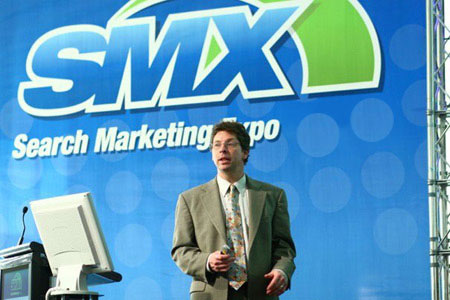 Session Description: Paid search lets you generate traffic from search engines by purchasing ads, usually on a cost-per-click (CPC) or pay-per-click (PPC) basis. This session covers the basics and current best practices of how to purchase placement from the major search engines, including the best ways to succeed with your ads, how to successfully measure performance and how to optimize your complete paid-search marketing strategies. Come join Danny Sullivan and several paid search experts in what promises to be an in-depth review of the paid search marketplace.
This session took place Wednesday, April 22, 2009. The speakers:
- Danny Sullivan, Editor-in-Chief, SearchEngineLand.com (Moderator)
- Mona Elesseily, Director of Marketing Strategy, Page Zero Media
- Chris Zaharias, VP, Search Sales, Omniture
- Nick Sheth, Director of Business Development, Gap Inc. Direct
Unfortunately the presenters talked really quickly, so I tried to get down as much as I could!
Bullet Point Review! Mona Elesseily:
- Get campaign architecture straight from the beginning.
- Think about keywords.
- Tap external sources.
- Proper tracking should be in place from the beginning.
- Is your company equipped to track?
- Define your PPC objectives.
- Tie the objectives to solid metrics.
- Tracking online conversion.
- Online order and pickup offline.
- Store location page.
- PPC local
- Focus on ad copy.
- Brainstorm.
- Product and Service descriptions.
- Calls to action.
- Offers.
- Features/Benefits.
- String things together after brainstorming.
- Brainstorm.
- Think “buying cycle”.
- Testing yields results!
- Get rid of extra information if it doesn’t impact conversions, doesn’t belong.
Nick Sheth:
- Know Your Trademarks.
- Register your marks with Google (including misspellings).
- Ensure you have clear, well communicated policy usage of marks by partners (affiliates, shopping engines, partners, etc.)
- Monitor your marks with a service
- Suggestions: AdGooroo, The Search Monitor, BrandVerity (I can personally vouch that this one is awesome), or Mark Monitor.
- Remember your domains (offensive and defensive).
- Suggestions: Alias Encore (which, again, I can personally vouch for), CitizenHawk.
- Hold domains that are even remotely related.
- Know Your Promotions & Offline Marketing Calendar.
- Calendar your promotions and share them with your agency and all digital marketing teams.
- Leverage offline marketing (buy terms, watch trends, use content ads).
- Finely tune search copy; don’t use blunt force – promotions should be relevant to your ad group.
- Work closely with marketing within your organization on all levels. Building trust is paramount to gaining the autonomy needed to execute quickly.
- Know Your Site.
- Landing page relevancy – right page for right copy and keyword.
- Product availability and assortment – consider using data feeds to automate.
- Dead pages – seems like common sense but there are a lot of ads out there that point to dead pages. Make sure you have internal tools and/or an agency to monitor pages.
- Know More About Your Site.
- Use on-site search to drive SEM & SEO.
- Use paid search to get ideas for SEO.
- Use SEO for paid search keyword ideas.
- Have a human review – don’t leave it all up to automation.
- Know What Works.
- Develop a culture of testing, including landing pages, copy, and promotions.
- Build a test budget into your annual P & L.
- Statistical significance is key.
- Maintain a testing plan that always has tasks and is consistent.
- Know Your Business.
- Understand your goals.
- Understand how you are moving the needle.
- Ensure you’re thinking about your portfolio optimization.
- Question branded search and answer: is it incremental?
- Look at everything holistically.
Chris Zaharias:
- Start -> key business requirements -> keyword research -> campaigns & ad groups -> syndicated strategy -> ad copy -> bid optimization -> analyze & conversions
- Business goals -> KPIs -> Optimization
- Use pre-defined metrics.
- Clicks, Impressions, Click-Through Rate
- Return on ad spend.
- Cost per Acquisition.
- Define and value customer metrics.
- Cart abandonment rate.
- Average Order Value.
- KPIs to measure branding.
- Multi-KPI Optimization.
- Search reacts to TV advertising.
- Measure across channels.
- There’s a myth that the long tail keeps growing – this isn’t true.
- The long tail is now in reverse.
- People are using search as navigation – i.e. they already know what they’re looking for but they go to a search engine to find it easily instead of typing in the URL directly.
- Assumptions:
- The long tail keeps growing.
- There’s 1001 things to do in search.
- PPC = Traffic Management.
- Listen to your search engine.
- Reality:
- Win the head, win the battle.
- Return on efficient, defined work flow.
- Pre & post-click are equally important.
- Search engine advise is often a contrary indicator.
I don’t have any notes from a question period, and I definitely don’t remember there being time for questions. Overall this was a completely useful session for me, given that I’m not an old hat at PPC marketing. It was presented very well and clearly thought out. I appreciated the slide presentations that all three presenters used and I only wish they’d shared them online somehow!
Read More


